Archive for idioms

idiom: to give someone a run for their money

I recently heard someone use today’s idiom at a party, so I’d like to write about it today. The expression is to “give someone a run for their money”. It is used when we want to talk about two people doing something which requires some skill. The main person is very good at it, but the second person’s skill is almost equal. The first person is still better, but the second person shows that their skill is almost as good. For example:

Carl is really getting a lot better at tennis. We played yesterday and I won, but he really gave me a run for my money.

Betty wins the baking competition every year, but this year I think I’ll give her a run for her money with my apple pie.

Everyone thinks The Storm by Martin Collins will win the best book prize this year, but the new book by Pauline Young will really give Collins a run for his money.

So far Germany has won 232 gold medals at the Olympics, but Italy is giving them a run for their money with 227 gold medals.

So we usually use this idiom when talking about games, sports or competitions. The idea is the favored person or team to win will have to work harder in order to stay in the lead position. They can’t just relax and assume that they will win for sure.

idiom: to take the bull by the horns

Welcome to my first blog entry of 2011! Because it’s a new year and people often make resolutions to improve their lives at this time of year, I thought I’d teach you an idiom that is connected with that: to “take the bull by the horns”. We use it when we want to talk about directly and actively trying to get what we want rather than trying to get it passively or indirectly. For example:

A: I have a problem with my neighbor. He’s really noisy at night. I’m going to complain to my landlord about him.

B: If I were you, I’d take the bull by the horns and talk to him directly. I think that’s a much better way.

I haven’t been able to lose much weight, so I’m going to take the bull by the horns and hire a trainer at my local gym.

A: How did you get a promotion so quickly at this company?

B: I took the bull by the horns and told my boss I wanted the manager’s job.

If you want to date Sarah, you should take the bull by the horns and just ask her out.

We always use this idiom in positive sentences, but we don’t use it in negative sentences. Also, it’s rare to use it in questions. I said we can use this idiom at the beginning of a new year because that’s when people feel most motivated to go after what they want directly. So I hope in 2011 that you can get what you most want. Just remember to take the bull by the horns and do it!   🙂

idiom: to have a ball

I don’t have much time to write my blog today, so I’ll write a short but useful one. I’m going to Disney Sea with friends today, and it reminded me of today’s expression. It’s to “have a ball”. This is used when we want to say we have a lot of fun when doing something. For example:

I went to Disneyland with my family yesterday, and we had a ball!

I’m sure you’ll have a ball when you go to Mexico! It’s a really fun place!

My son is having a ball at kindergarten! He can’t wait to get there every morning!

So we use this expression in positive sentences, but we DON’T use it in questions or in negative sentences.

I hope everyone will have a ball during the holiday!

idiom: to hit the road

The idiom for today is to “hit the road”. It is used when we want to say that we are going to leave for some place on foot, by car or by public transportation. For example:

It’s late, so I’d better hit the road now.

If we don’t hit the road soon, we’re going to miss the train.

A: Is your brother still with you?

B: No. He hit the road about an hour ago.

I don’t want you in my apartment anymore, so just hit the road!

It’s more common to use this idiom in casual conversation. We can use it in the imperative, as in the last example, but we more commonly hear that in movies and on TV shows. Sometimes we can hear it in songs too such as in the famous Ray Charles song, “Hit the Road, Jack”.

As I mentioned, we use this expression when leaving for a place on foot, by car or by public transportation, but we can’t use it when leaving on a ship or plane because there is no road involved.

idiom: to give someone a piece of one’s mind

I recently saw an article on the Internet about a famous actress who was really angry at a photographer, and in the article they used today’s idiom: to “give someone a piece of one’s mind”. So, this is used when we want to talk about a person confronting another person directly when they are angry with that person and telling them directly how they feel about them. So, of course, the feeling is always negative. For example:

Julia Roberts gave a photographer a piece of her mind after she saw him taking pictures of her children.

Did you hear about Daniel? His boss tried to make him work on his day off, so Daniel really gave him a piece of his mind.

Beth is late again! She always makes us wait for her! When she finally gets here, I’m going to give her a piece of my mind!

So, you can remember this idiom by imagining that there’s a small piece of your mind with all your negative thoughts in it about this person. Usually we don’t share that, but sometimes we are so angry that we need to share, or give, that piece of your mind and tell the person how we feel. This can be used about people we know or with strangers.

idiom: to beat around the bush

dont_beat_around_the_bush_greeting_card-r9affaf88eed64b84b3349ca6183bacfc_xvuak_8byvr_512

If you know anyone who tends to talk in circles and never comes to the point, you can use today’s idiom to describe them. To “beat around the bush” is used to talk about people who talk about something indirectly but won’t say the important point directly. For example:

What are you trying to tell me? Stop beating around the bush and just say it!

My boss tends to beat around the bush if he has bad news to give us. I wish he wouldn’t do that.

My friend really hates confrontation, so he always beats around the bush if he has something negative to say.

When people “beat around the bush”, it’s usually because they have something negative to say and are trying to avoid saying it. However, it can also describe people who have a general habit of talking in circles and not saying things directly. In English speaking culture, to “beat around the bush” is considered a negative thing to do.

idiom: to have a bone to pick with someone

dog_with_bone

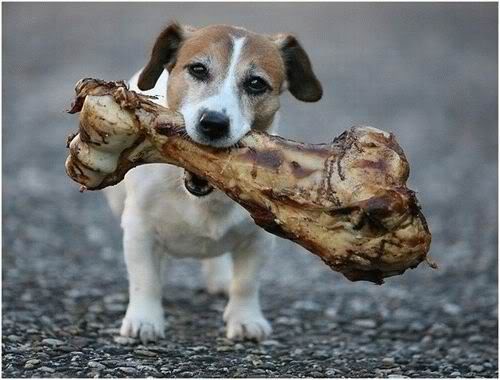
If you’ve ever been a little angry with someone and wanted to tell them directly what they did to annoy or anger you, you can use today’s idiom: to “have a bone to pick with” someone. It is used when we want to talk about being angry or annoyed with another person. For example:

I have a bone to pick with you! You completely ignored me at the party last night! Why did you do that?

I have a bone to pick with Susan. She didn’t finish her report on time and it caused a big delay. I’m going to talk to her about it later.

What’s wrong? Why aren’t you talking to me? If you have a bone to pick with me, just tell me!

If we use this when speaking to someone directly, it’s a little strong, but it’s a common way to indicate that you’re annoyed with someone before you tell them what it’s about. The level of your anger will be indicated by your tone of voice. If your intonation goes down, you will sound very angry, but if it’s kept up, it will indicate that you’re just annoyed about something.

idiom: to bend over backwards

bending_over_backwards

Have you ever tried really hard to please someone? If so, you can use today’s idiom to describe that situation. We can use the idiom to “bend over backwards”, when we want to talk about making a big effort to make another person happy. For example:

I really liked the service at the hotel where I stayed in Singapore. The staff just bent over backwards for me.

I can’t believe how ungrateful my husband is! I bend over backwards to cook and clean for him, but he never appreciates anything I do!

A: I hope I get a promotion this year.

B: I’m sure you will. You bend over backwards for everyone in this office, and I’m sure you boss has noticed that.

I’m so angry right now! I invited my friend to dinner last night. I bent over backwards to make a nice dinner for her, but then she cancelled at the last minute!

So when we use this expression, the effort that we make for the other person can either be appreciated or not. If we make a big effort for someone but the result is that they don’t care about our effort, we always use the word “but” in the sentence (as in the second and fourth examples).

idiom: to (not) see eye to eye

12646516_0a15_625x1000

In my very first blog, I mentioned today’s idiom briefly, but it’s a very common expression so I’d like to go over it again in more detail today. The expression is to not “see eye to eye” with someone. It is used when we want to talk about not agreeing with someone. It is usually used in the negative. For example:

My boss and I don’t see eye to eye about where to open the new branch.

Last night, my friend and I didn’t see eye to eye about what to eat for dinner.

My sister and brother never see eye to eye about what to watch on TV.

My husband and I don’t see eye to eye about movies. He likes action movies and I like comedies.

As I mentioned, this expression is usually used in the negative, but sometimes it can be used in questions. For example:

A: Do you and your husband always see eye to eye about everything?

B: No, of course not!

Sometimes, it’s possible to use it in a positive sentence, but these cases are much less common. For example:

I’m glad we see eye to eye about this project.

As you can see, we use the preposition “about” when talking about the topic that the two people either agree or disagree about, and we use “with” when talking about the person that the person agrees or disagrees with.

idiom: to be on its last legs

dishwasher-repair

If you’ve ever  kept an old machine of some kind for a long time, today’s idiom will probably be useful for you. The idiom is for something to be “on its last legs”. This expression is used when we want to talk about a machine which is old and in poor condition and very close to breaking down completely. For example:

My TV set is about 20 years old, and it hasn’t been working well recently. I think it’s on its last legs.

This computer is on its last legs. We’re going to have to buy a new one soon.

Our dishwasher finally broke down completely last night. It had been on its last legs for a while, so I wasn’t surprised.

I think the reason we use this idiom with machines is because we often say that a machine “runs” on electricity or on some other source of power. Traditionally, if something is running, it must have legs to do that with. Therefore, if something will stop running soon, its “legs” are losing power. That is just my guess, but it could be a useful way to remember this idiom.

Next entries » · « Previous entries