grammatical expression: what if

https://i0.wp.com/goodmessengers.org/pic/whatif.png

Today’s grammatical expression is “what if” and it can be used in three ways. The first way is when we are worried about something and we want to talk about the thing we are worried about. For example:

I’m really worried about my new job. What if I make a mistake on my first day?

I really don’t want to change my school. What if nobody likes me at the new school?

I don’t want to buy such an expensive watch. What if I break it?

The second way to use “what if” is when we are making a suggestion and we want to know someone’s opinion of our suggestion. For example:

A: I like the design for this ad, but it doesn’t look quite right.

B: What if we changed the background color to green?

A: Yes, I think that would be a good idea.

________________________________________________________________

A: My wife is angry at me because I forgot her birthday.

B: What if you took her out for an expensive dinner?

A: No, I don’t think that will work. She’s really angry!

________________________________________________________________

A: I don’t know how I’m going to finish all this work tonight.

B: What if Sam and I help you?

A: That would be great! Thank you so much!

The third way to use “what if” is when asking about another possibility which is different from the present situation. For example:

A: Did you hear that ABC Company went bankrupt?

B: Really? I almost invested in them. What if I had actually done that? I would have lost a lot of money.

There was a big fire in my apartment building while I was at work. What if I had been home at the time? I could have died!

What if you found out you had only six months to live? What would you do with that time?

This last way of using it is a little more complicated than the other two ways. In this case, we are imagining the possibility of something happening which is not real. Therefore, we often use the word “would” or “could” because they indicate that we are talking about something which is only in our imaginations.

adjective: nosy

Today’s adjective is “nosy”, and it can be used to describe a person who tries to find out personal information about other people. For example:

My neighbor is really nosy. She’s always looking out her window to see what we’re doing.

I don’t want you to think I’m being nosy, but I was just wondering if you’re married.

I caught my friend snooping through my things in my apartment. He’s so nosy!

I don’t like Jill and Tom because they’re so nosy. They’re always asking people really personal questions!

So, as you can tell from my examples, the word “nosy” is always negative. In my third example, I used the word “snoop”. We use this word when we want to talk about a person who looks through the things that belong to other people. Again, this is always considered negative.

grammatical word: ruin

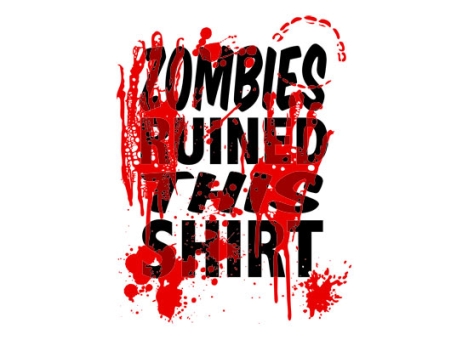
zombies-ruined-this-shirt-zombie-tshirt-zombie-tee-zombie-gift-zombie-product-1

Today, I have a verb for you which is very useful, but which many of my students don’t know about; the word is “ruin”. It is used when we want to talk about someone damaging a situation so much that it cannot be fixed. For example:

I added salt instead of sugar to the cake, so I ruined it.

Bruce got completely drunk and ruined my party! I’m so angry at him! I’ll never speak to him again!

Vicky spilled ink all over my shirt. That stain will never come out! My shirt is ruined! (passive voice)

I had an opportunity to get a promotion but I ruined it by being lazy at work. I’ll never do that again.

So we can use this word with physical things like clothes or food or we can use it with non-physical things such as parties or opportunities. We don’t use it when talking about machines or fragile objects though. In those cases, we use the word “break”.

the difference between words: anticipate and predict

https://i0.wp.com/www.enterpriseirregulars.com/wordpress/wp-content/uploads/2009/12/crystal-ball.jpg

Recently, one of my students asked me about the difference between “anticipate” and “predict”. That is what I’d like to write about today.

We use both “anticipate” and “predict” when talking about what we or another person think will happen in the future. The difference is that we use “anticipate” when the event will happen in the near future or at a specific time. We usually use “predict” when the event will happen further in the future or when we don’t know the specific time.

In addition, when we use “anticipate”, it sounds like we have some information that allows us to guess what will happen. When we use “predict”, we may or may not have some information which helps us to guess what will happen. Generally, it sounds like it’s simply the person’s opinion about what will happen. For example:

We anticipate at least 50 people will come to the party, so we’d better make sure we have enough food for everyone.

The weather forecaster said they anticipate that the storm will hit our city at about 9:00 p.m. tonight.

Based on our sales figures for last year, we anticipate an increase of about 30% in sales during the months of September and October.

I predict that people will live on the moon within 100 years.

Everyone in high school predicted that Ken would become rich one day, and they were right. He’s worth over 20 million dollars right now.

Some people are predicting that Chinese will replace English as the international language in the future, but I don’t think it will happen.

With both of these words, we can use the word “that” after them, but this is optional; many people leave it out, especially in conversation.

Also, we can put a noun after the word “anticipate”, as in my third example.

idiom: to go Dutch

https://i0.wp.com/www.arcaini.com/Mo/NuTitle.jpg

I have a very short and simple entry for you today. It’s the idiom, to “go Dutch”. It is used when we are at a restaurant or bar with someone and want to talk about each person paying for their own food and drinks. For example:

When I go out with my friends, we usually go Dutch.

A: Shall we go Dutch tonight?

B: No, not this time. Tonight it’s on me.

I can’t let you pay for the whole bill, so let’s go Dutch.

I like the idea of going Dutch because it’s a very fair system.

In the second example, I used “it’s on me”. When someone says this, it means that they will pay for the entire bill.

Apparently, this expression come from the custom in the Netherlands where people usually pay separately even when dating.

intransitive phrasal verb: go around

https://i0.wp.com/www.kittyhell.com/wp-content/uploads/2008/03/hello-kitty-facemask.thumbnail.jpg

I have a phrasal verb with three different meanings for you today: “go around”. Let me go over the various meanings for you.

1. for an illness to be passed from person to person (usually a cold or the flu). For example:

I caught a bad cold on Sunday. You’d better be careful. It’s going around these days.

My friends in Japan are wearing face masks these days because the flu is going around, and they don’t want to catch it.

2. for a rumor or piece of gossip to be circulated. For example:

There’s a rumor going around that you are planning to start your own company. Is it true?

It’s going around at the office that Peter and Meg are dating, but it’s not true.

3. to have enough of something for everyone in a group. For example:

There aren’t enough test papers to go around, so we’ll have to photocopy some more.

Do you think we’ll have enough champagne to go around, or should we open another bottle?

With the first two meanings, we always use this expression in the -ing form – “going around”. However, with the last meaning, we use the infinitive form – “to go around”. As you can see, we also often use the word “enough” in this case.

grammatical expression: you’d think…but

surprise

I have another very common and useful expression for you today. It is “you’d think…but…” It is used when we want to talk about when we have a certain expectation of a situation, but then it isn’t true in reality. For example:

This restaurant is very expensive. You’d think that it would be good, but it’s not.

Frank studies Spanish all the time. You’d think that his Spanish would improve, but it doesn’t.

I threw a surprise birthday party for my girlfriend. You’d think that she would have been happy about it, but she wasn’t.

People in Africa are very poor. You’d think that they would be very unhappy, but many people are not.

So, as you can see from the examples, we usually have a sentence at the beginning which introduces the subject, and then we use the expression to talk about how our expectation turned out to be wrong.

Also, please note that the word “you’d” is the contracted form of “you would”, NOT “you had”.

adjective: eccentric

https://englishhelponline.me/wp-content/uploads/2011/03/ladygaga5.jpg?w=236

For the adjective this week, I’d like to go over the word “eccentric”. It is used to describe a person whose behavior is a bit unusual or strange. However, if we use the word “strange”, it is always negative. But if a person is a little strange but you still like them and want to sound more positive when describing them, you can use the word “eccentric”. For example:

Lady Gaga is a very eccentric singer and songwriter who is very popular these days.

My aunt is a bit eccentric, but she’s very interesting. Most people really like her.

I just saw a really funny movie about an eccentric family who live in New York. You should see it.

A: What do you think of our new co-worker, Gerry? He seems kind of strange to me.

B: I don’t think he’s strange. He’s just a bit eccentric, that’s all.

So we can use this word to describe people we know, famous people or characters from a story. Generally, though, we don’t use it when talking to someone directly. Therefore, please don’t say to someone directly, “I think you are eccentric.” This would seem a bit rude.

grammatical word: work

https://i0.wp.com/farm4.static.flickr.com/3065/2727749953_67a6160d39_z.jpg

Today I’d like to go over another verb which has other meanings that many people don’t know about; the verb is “work”. Of course, everyone knows the primary meaning which is to do a job. However, we can also use it when trying to arrange a time to meet someone. For example:

I’d like to get together with you at 4:00 tomorrow. Does that work for you?

I have another appointment at 2:00, so 3:00 works better for me.

I’m afraid having the meeting at 11:00 doesn’t work for me. I have another appointment then.

We can also use it to talk about the functioning of a machine. For example:

Is your cell phone working? I tried mine, but I can’t get a signal.

This computer isn’t working properly. I’d better get someone to come take a look at it.

I don’t know what happened. I was driving my car down the street when it suddenly stopped working.

Another way to use this verb is when talking about the effectiveness of something. For example:

I tried my friend’s cure for hiccups, and it worked.

I took some medicine for my headache, but it didn’t work.

The ad we placed in the newspaper is working well. We’ve gotten many new customers from it.

If you want to remember to people’s names better, you should try the technique in this book. I tried it, and it works well for me.

the difference between words: ago and back

https://i0.wp.com/www.backtoourpast.com/mysitecaddy/sitedata/backtoourpast.com/system/themes/backtoourpast/logoPhoto.gif

One of my readers asked me what the difference was between “ago” and “back”, so that’s what I’ll write about today.

We use “ago” to talk about something that happened a certain amount of time before the present moment. For example:

I went to high school just over 20 years ago.

The meeting started five minutes ago.

The last time I went to the movies was six months ago.

We use “back” to talk about a certain period in the past. For example:

Back in the 19th century, people used to ride in carriages instead of cars.

Back in the 1980s, leg warmers were very popular.

Back in my childhood, I used to play a lot of video games. I don’t do that anymore though.

When I was young, we didn’t have computers. We had to write everything on a typewriter back then.

Some people also use “back” in the same way as “ago”. For example:

I worked for ABC Company about ten years back.

I went to France on vacation six years back.

It’s important to note that this way of using “back” is NOT common and that the majority of people will use “ago” instead. Also, people usually only use this with the word “years”. Frankly, I do not recommend anyone to use “back” in this way, but you might hear it sometimes in an American movie.

Newer entries » · « Older entries