the difference between words: expect and look forward to

Image

Today, I’d like to write about the difference between “expect” and “look forward to”. This is a common misunderstanding for many English learners.

We use the verb “expect” when we want to talk about something that we anticipate will happen in the future. For example:

I’m expecting the package to be delivered at 3:00 p.m. That’s when the courier company said it would be here.

Why do you look so worried? Are you expecting something bad to happen today?

I expect that the economy will improve soon, so I’m going to start investing now.

However, we use the term “look forward to” when we want to talk about something that we are planning to do in the future and which we are very happy or excited about. For example:

I’m really looking forward to my vacation in Italy! I’ve always wanted to go there!

I’m looking forward to the day that I retire. I’m really tired of working!

I look forward to meeting you in person at the conference in New York.

When using “look forward to”, we always use a noun or the -ing form of a verb after the word “to”.

You should also be aware that there is a difference in formality between “I look forward to…” and “I’m looking forward to…”. When we use the simple present (I look forward to) it is much more formal than the present continuous (I’m looking forward to). Therefore, we usually use the simple present for business situations and the present continuous for daily conversations.

Please note that we can use “expect” for all types of situations: positive, negative and neutral, but we can only use “look forward to” to talk about positive situations.

grammatical expression: (it) goes without saying


it-goes-without-saying-

Well, it’s the last day of the year, so I’d like to write one last blog entry for 2011. It is the expression “goes without saying”, and it’s used when we want to assure another person about something. For example:

We’re very sorry about sending you the wrong item. We’ll send you the correct one immediately, and it goes without saying that there will be no delivery charge.

A: When we go out for my birthday, are you going to pay for dinner?

B: Oh, that goes without saying! It’s your birthday!

It goes without saying that I will do my very best at this job! Thank you for giving it to me.

As you can see from my examples, we usually put the word “it” at the beginning of this expression. However, if we use it as a response to another person, as in my second example, we use the word “that” instead.

When we say something “goes without saying”, we’re basically saying that it’s so obvious that it shouldn’t have to be said. However, we say it anyway in order to make the other feel assured about it.

the difference between words: always and forever

870775460_672

I recently had a request by someone to explain the difference between “always” and “forever” so that’s what I’d like to do today.

The word “forever” is used when we want to say that something will last for all time. In other words, it will never end. For example:

I will love you forever.

There will forever be distrust between Bill and me.

People have been killing each other in wars forever.

As you can see from my examples, we can use this for both past and future situations.

We can also use “always” to explain these types of situations, but the word “forever” is more formal and dramatic while “always” is more for everyday conversation. For example:

I will always love you.

There will always be distrust between Bill and me.

People have always killed each other in wars.

However, we can also use “always” in other situations. It can be used when we want to say that there is a certain condition which is true every time something happens. For example:

When I get home from work, my husband is always watching TV.

I always get annoyed when I’m on a crowded train.

We can also use it to describe the state of a person or thing in general when it never changes. For example:

Sarah is always happy. I really envy her.

The traffic light on Main Street is always broken. I don’t understand why they don’t fix it.

intransitive phrasal verb: nod off

https://i0.wp.com/www.thedetroitbureau.com/wp-content/uploads/2010/11/Drowsy-drivers-300x225.jpg

Today, I’d like to teach the phrasal verb “nod off”. This is used when we want to talk about a person who falls asleep while they’re doing something. For example:

My brother got into a car accident because he nodded off while he was driving.

I nodded off in the theater, so I missed the end of the movie.

The meeting was so boring that I kept nodding off while the boss was speaking.

This phrasal verb is intransitive which means that it doesn’t take an object in the sentence.

adjective: slow

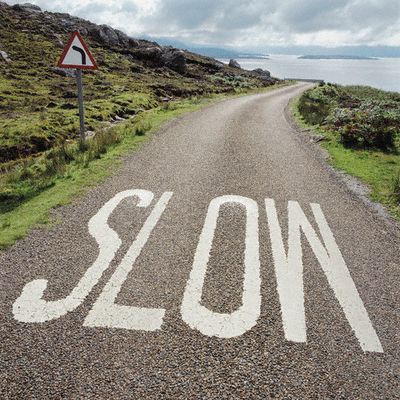
Signs Warning of Approaching Curve

Today I’d like to write about a common adjective, “slow”. This is another example of a word that has other meanings that many people don’t know about. Of course, the main meaning is for a thing or a person to take a long time to move, but I’d like to go over its other meanings today.

1. for a period of time to not be very active. For example:

I had a slow day today. I just read a book and cleaned up my apartment.

I’m worried that the years after my retirement will be really slow.

2. for a company or store to not have many customers. For example:

Business has been very slow recently. We have to find a way to attract more customers.

It’s a slow night at the bar tonight because it’s a Tuesday. It will get busier on Friday and Saturday nights.

3. for a clock or watch to be behind the real time. For example:

Is it really 4:00 now or is that clock slow?

My watch is a little slow. Can you tell me what time it is?

4. for a person to have trouble understanding something which is easier for other people. For example:

My brother is a little slow when it comes to math.

The students in this class aren’t stupid. They’re just slower than the other students in the school.

grammatical expression: look on the bright side

https://englishhelponline.me/wp-content/uploads/2011/10/landpseries-lookonthebrightside.jpg?w=300

Today I have another grammatical expression for you that is often used in English: “look on the bright side”. We use this when there is a negative situation, but we want someone to focus on a positive aspect that this situation has created. For example:

A: I had to work overtime every night this week!

B: Well, look on the bright side. Your paycheck this month will be a lot higher.

_________________________________________________________________

A: I lost my job, so I had to move back in with my parents.

B: Look on the bright side. At least you don’t have to cook your own meals right now.

_________________________________________________________________

A: I’m sick with the flu and I can’t go to work today!

B: Well, look on the bright side. You can relax at home for a day or two.

So, as you can see from my examples, we use this expression as a response to another person’s complaint about their situation. We usually say it as a way to try to make people feel better about their negative situation.

idiom: to play with fire

Christine-Playing-with-Fire

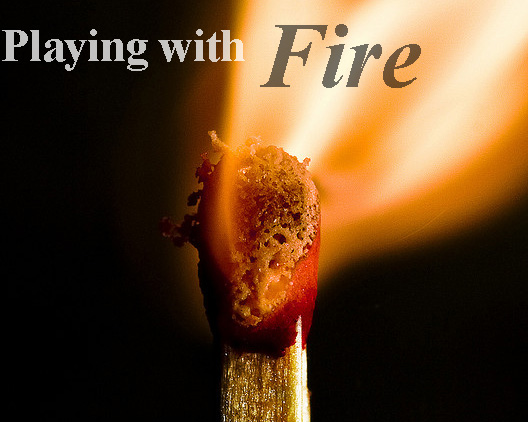
Today I’d like to teach you another idiom: to “play with fire”.  We use this expression when we want to talk about a person who is doing something that could lead to a negative or dangerous result. For example:

You’re dating two girls at the same time? I think you’re playing with fire. If they find out, you’ll lose both of them.

You’re playing with fire if you go into business with Carl. He’s got a really bad reputation.

A: I take drugs sometimes, but I’m not addicted.

B: I think you’re playing with fire. If you keep taking them, you’ll get addicted.

People who buy products from ABC Company are playing with fire. That company has had so many problems with product safety.

The first two sentences are examples of a negative result and the last two are examples of a dangerous result. As you can see from all the examples, we almost always use the present continuous tense (am/is/are +ing) with this idiom.

phrasal verb: go around

https://englishhelponline.me/wp-content/uploads/2011/09/goaround.jpg?w=300

This week, I’d like to teach you another phrasal verb. This time it’s the expression “go around”. In English, this has three different meanings:

1. for an illness to be passed from person to person (usually a cold or the flu). For example:

I caught a bad cold on Sunday. You’d better be careful. It’s going around these days.

A bad case of the flu is going around right now, so I’m worried that I’ll catch it.

2. for something to be circulated (often a rumor). For example:

There’s a rumor going around that you and Peter are dating. Is it true?

You shouldn’t believe every rumor that goes around this office. Most of them aren’t true.

3. to have enough of something for everyone in a group. For example:

There aren’t enough test paper to go around, so we’ll have to photocopy some more.

I don’t think there’s enough cake to go around. I should have bought a bigger one.

the difference between words: aggressive and assertive

https://englishhelponline.me/wp-content/uploads/2011/09/aggressivedriver-edit.jpg?w=300

Today one of my students got mixed up between the words “aggressive” and “assertive”, so that’s what I’d like to write about this week.

If we say someone is “aggressive”, it sounds like the person is extremely forceful and could possibly be dangerous or violent. However, if we say someone is “assertive”, it means that they will say what they think strongly or will try to get what they want, but it doesn’t sound like they are violent or dangerous. Here are some examples:

I don’t like Jerry when he’s drunk because he gets really aggressive. Last time, he started a fight with another guy.

My brother is a really aggressive driver, so I hate being in the car when he’s driving.

If you want to get a raise from your boss, you should be more assertive. If I were you, I’d just ask my boss for the raise directly.

Pam is a very successful salesperson because she’s smart, charming and assertive.

In my third example sentence, I talked about “a raise”. This word means a salary increase.

So, the word “aggressive” is very negative, but the word “assertive” is positive. Please be careful not to call someone “aggressive” if you want to say something positive about them. In those cases, you should always use the word “assertive”.

grammatical expression: when pigs fly

when-pigs-fly-aurally-dj-service.f2a87741e86b13455cec9c1572a00959-rg-522x522

Today’s expression is “when pigs fly”, and it is used when we want to say that something is never going to happen or that we have no intention at all of doing something. For example:

A: When are you going to finally go out with me?

B: When pigs fly! I’m never going to be your girlfriend!

_________________________________________________________________

A: I think you should vote for Bill Richards.

B: I’ll vote for him when pigs fly. I hate that guy!

_________________________________________________________________

A: My husband made dinner for me last night. It was so romantic.

B: Unfortunately, my husband will do that for me when pigs fly. I wish my husband were more like yours.

This expression means “never” because pigs will never be able to fly. So if someone asks you when you will do something and you know you will never do it, this expression can be very useful. However, you should be aware that it’s a little strong when said directly to a person asking you a question. In the first example, person B is not being polite because she doesn’t like the guy who is asking her for a date and she wants him to leave her alone.

Newer entries » · « Older entries