Archive for grammatical expression

grammatical expression: at the end of the day

https://i0.wp.com/www.israbox.com/uploads/posts/2010-10/1287081665_51lfmvvyd8l._sl500_aa500_.jpg

This week, the grammatical expression is “at the end of the day”. We use it when we want to express what we think is the ultimate truth about a certain situation. It’s like saying, “At the end of this situation, this is the truth.” For example:

I can tell you my opinion about which school to go to but, at the end of the day, you have to make your own decision.

People get so worried about having job success but, at the end of the day, love is all that matters.

A: I don’t know who to vote for?

B: Well, at the end of the day, it doesn’t really make a difference who wins; both candidates are so similar.

I think we should get a bigger apartment. I know it’s more expensive but, at the end of the day, being comfortable is more important than money.

People often use this expression when they want to make broad statements about how they feel about a situation.

As you can see from some of my examples, we often make a statement such as “I know it’s more expensive” or “People get so worried about having job success”. After that, we put the word “but” followed by “at the end of the day”. Finally, we say what we feel is the ultimate truth of the situation.

grammatical expression: the more the merrier

https://i0.wp.com/fc03.deviantart.net/fs71/i/2010/233/d/b/The_MORE_the_MERRIER___Desktop_by_C2SilvaRymes.png

I was recently in a conversation with someone, and I used today’s grammatical expression: “the more the merrier”. I thought it would make a good entry for today. We use it when someone asks if another person can come to a planned event such as a party. We say “the more the merrier” in response, and it means that the other person is welcome to come: In other words, the more people at the event, the better it will be. For example:

A: Is it ok if I bring my girlfriend to the party?

B: Sure!  It’s totally ok! The more the merrier!

__________________________________________________________________

A: I wasn’t invited to go drinking after the meeting. Do you think it’s alright if I come?

B: Of course it’s alright! The more the merrier! Please tell other people to come too!

__________________________________________________________________

A: I really want to go to Doug’s party, but I don’t know if I should.

B: I’m sure he’d love for you to come! The more the merrier!

So, in the expression, we use the word “merry” which is another word for “happy”. However, we don’t use “merry” very much in modern English. It’s only used in special expressions such as this one, or at Christmas time when we say “Merry Christmas”.

grammatical expression: second to none

https://i0.wp.com/www.explosionspiritwear.com/designs/l/1224092667illBeSecondToNone.jpg

The other day I was reading an article on the Internet, and in it I saw the grammatical expression for today: “second to none”. We use this expression to talk about things which are the best in our opinions. In other words, according to us, they are number one. For example:

The apple pie at this restaurant is second to none. I highly recommend it!

When it comes to cooking, my wife is second to none.

For Canadians, hockey is a sport which is second to none.

Of all the books I’ve read, Midnight’s Children is second to none.

As I mentioned in a recent blog, when North Americans say “hockey”, it means ice hockey. When other people say “hockey”, they mean field hockey.

In my last example, I mention the novel Midnight’s Children by Salman Rushdie. This is my personal favorite book of all time, but that is my opinion. Other people may not agree. Therefore, when I say it’s “second to none”, it means that it’s number one for me.

grammatical expression: a tad…

a

Today I would like to write about the expression “a tad”. It basically has the same meaning as “a little”. However, we use “a tad” when we feel something is negative. For example:

Your report is a tad long. I think you’re going to have to make it shorter.

There was a tad too much spice in the soup. Next time, please don’t put so much in.

My apartment is a tad messy right now so I don’t want to invite anyone over.

My neighbors were being a tad too loud last night, so I went to their apartment and told them to be more quiet.

So, even though “a tad” literally means “a little”, it is sometimes used in a sarcastic way. Therefore, in my examples, the speaker thinks that the report was much too long, that there was much too much spice in the soup, that the apartment is much too messy and that the neighbors were being much too loud. We use “a tad” because it’s softer and it’s often seen as being humorous. When we are speaking, we usually emphasize the word “tad” to indicate that we’re being sarcastic.

grammatical expression: I’m afraid…

https://i0.wp.com/images5.cpcache.com/product/talk%2Blike%2Bhal%2Bday%2B-%2Bi%27m%2Bafraid%2Bi%2Bcan%27t%2Bdo%2Bthat%2Bmug-fantasy%2B-%2Bscience%2Bfiction/476608945v4_225x225_Front.jpg

Sometimes when we’re speaking and writing English, negative statements can seem a little rude. This week’s grammatical expression, “I’m afraid” can help in these situations.

We use this expression at the beginning of negative statements to make them sound softer and more polite. For example:

A: Can you come to my party on Saturday night?

B: I’m afraid I can’t. I have other plans that night. Maybe some other time.

_________________________________________________________________

A: Is Geoffrey Parker there?

B: I’m afraid he’s not here right now. Can I take a message for him?

_________________________________________________________________

A: When will you be able to finish the project?

B: I’m afraid we’re behind schedule, so we won’t finish it until the end of the week.

_________________________________________________________________

A: I’m afraid I have some bad news. I got laid off today.

B: Oh no! That’s awful!

The statements which follow “I’m afraid” can either be negative grammatically (contain the word “not”), as in the first two examples, or negative in tone, as in the last two examples.

Please note that the word “afraid” in these cases doesn’t mean that we are scared. In these cases, it is simply used to soften the statement.

grammatical expression: at best

at

Today’s grammatical expression is “at best”, and we use it when we want to talk a person not being able to do something really well or within a certain time. We use “at best” to talk the highest level we think they are able to achieve. For example:

I don’t think I’ll win the race. At best, I’ll come in second place.

There’s no way we’ll be able to finish this project by May 5th. At best, we’ll finish it by May 8th.

I can’t make ten cakes by 5:00. I’ll be able to make seven of them at best.

I really doubt Steve will get an A in his chemistry class. I’d say he’ll get a B at best.

So, as you can see, we can put “at best” at the beginning of the second sentence or at the end of the second sentence. We always have a sentence at the beginning to explain the situation. We can use this expression to talk about ourselves or about other people who are not there. However, it’s very rude to say this to a person directly because it’s quite negative.

grammatical expression: fed up with

https://i0.wp.com/www.americanartarchives.com/nurick_im_fed_up_lhj44jan.jpg

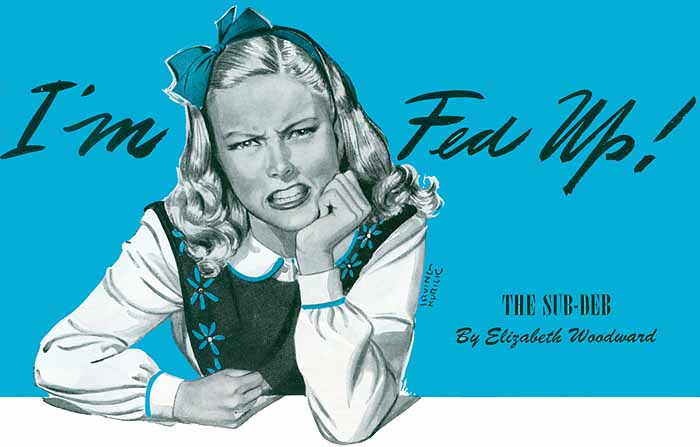
Today’s expression looks like a phrasal verb but actually is used like an adjective. For this reason, I’ve decided to write about it as a grammatical expression. It is to be “fed up”, and it is often followed by the preposition “with”. It is used when we want to talk about a bad situation that we have had to tolerate, but we don’t want to tolerate anymore. For example:

I’m really fed up with my boss! He’s always making me work on Sundays. I’m going to quit my job.

I’m fed up with the way this house looks! It’s so dirty and messy! We have to really clean it up.

I’m getting fed up with my friend’s attitude towards my boyfriend. I know she doesn’t like him.

My sister is divorcing her husband. She got fed up with the terrible way he treated her. She’s much happier now.

So as you can see from my examples, we can use the verbs “to be” or “to get” in front of this expression. That is why it functions as an adjective.

When we say “I’m fed up.”, it means we can no longer tolerate the situation and that we will do something to change it.. When we say “I’m getting fed up.”, it means we are still tolerating the situation but will probably soon want to change it. When we say “I got fed up.”, it means that we have already changed the bad situation.

grammatical expression: to take a turn for the worse

https://i0.wp.com/www.tradingheroes.com/wp-content/uploads/flatline.jpg

The grammatical expression for this week is to “take a turn for the worse”, and it is used when we want to talk about a bad or neutral situation which suddenly becomes worse. For example:

My life wasn’t very good, but things took a turn for the worse when I lost my job.

My friend was in an accident. His condition was stable, but he’s just taken a turn for the worse. I’m so worried!

We thought the economy was getting better, but yesterday things took a turn for the worse when one of the biggest companies in the country declared bankruptcy.

Negotiations between the two companies took a turn for the worse yesterday when ABC Company demanded more money.

We can sometimes use this expression to talk about personal situations but, in my opinion, it’s more commonly used to talk about bigger situations like politics, negotiations and serious health problems.

It’s very common to use the word “things” in the sentence such as in examples one and three.

grammatical expression: you gotta love…

https://i0.wp.com/www.bobthefish.com/categoryImages/limited_edition_you_gotta_love_bob.jpg

I have a very casual but useful expression for you today. It’s “you gotta love”. It is used when we want to talk about something that we like and think that everyone must feel the same way about it for a certain reason. Then, we usually express that reason in the next sentence. For example:

You gotta love this restaurant. The food is good, the prices are low and they give you a lot of food.

You gotta love this city in the summertime. The girls are pretty and they all wear short skirts.

You gotta love smart phones. You can do so many things with them.

You gotta love Jim. He’s really smart and funny.

The word “gotta” is a very casual way to say “have got to” which is another way to say “have to”. In this expression though, it doesn’t mean that everyone must like this person or thing; we are simply saying that this thing or person is really great.

grammatical expression: what if

https://i0.wp.com/goodmessengers.org/pic/whatif.png

Today’s grammatical expression is “what if” and it can be used in three ways. The first way is when we are worried about something and we want to talk about the thing we are worried about. For example:

I’m really worried about my new job. What if I make a mistake on my first day?

I really don’t want to change my school. What if nobody likes me at the new school?

I don’t want to buy such an expensive watch. What if I break it?

The second way to use “what if” is when we are making a suggestion and we want to know someone’s opinion of our suggestion. For example:

A: I like the design for this ad, but it doesn’t look quite right.

B: What if we changed the background color to green?

A: Yes, I think that would be a good idea.

________________________________________________________________

A: My wife is angry at me because I forgot her birthday.

B: What if you took her out for an expensive dinner?

A: No, I don’t think that will work. She’s really angry!

________________________________________________________________

A: I don’t know how I’m going to finish all this work tonight.

B: What if Sam and I help you?

A: That would be great! Thank you so much!

The third way to use “what if” is when asking about another possibility which is different from the present situation. For example:

A: Did you hear that ABC Company went bankrupt?

B: Really? I almost invested in them. What if I had actually done that? I would have lost a lot of money.

There was a big fire in my apartment building while I was at work. What if I had been home at the time? I could have died!

What if you found out you had only six months to live? What would you do with that time?

This last way of using it is a little more complicated than the other two ways. In this case, we are imagining the possibility of something happening which is not real. Therefore, we often use the word “would” or “could” because they indicate that we are talking about something which is only in our imaginations.

Next entries » · « Previous entries