Archive for grammatical word

grammatical word: initiate

http://eardstapa.files.wordpress.com/2010/01/start-button.jpg

Today I would like to go over the verb “initiate”. It has three meanings in the English language:

1. to be the first person to start a plan with another person (usually among friends). For example:

I’m really annoyed with my friends now. Whenever we do something, I’m the one who always has to initiate. They never call me first.

I don’t usually initiate plans with my friends because I’m so busy. They always call me first.

A: Who initiated the plan to go bowling this weekend?

B: I’m not sure, but I think it was Lance who initiated it.

2. to begin some kind of policy, plan or project. For example:

My company has initiated a new dress code policy. Now we have to wear a suit at work all the time.

America will initiate the next phases of the new health care law soon.

North and South Korea have initiated talks to resolve some of their differences.

3. to allow someone to enter an organization through some kind of ritual or challenge. For example:

The university fraternity initiates its new members by making them eat really strange food.

A: How did that club initiate you as a member?

B: They made me memorize a long speech and give it to them wearing only my underwear.

Please be careful with the pronunciation of this word; it is pronounced /in NISH shee ate/. If you’re not sure, you can use The Free Dictionary to hear the proper pronunciation. The link for that site is on my blog.

grammatical word: agree

https://i0.wp.com/www.stanford.edu/group/parasites/ParaSites2006/Cryptosporidiosis/Images/stomach-ache.gif

Today I have another verb for you which has a second and surprising meaning; the verb is “agree”. I think most people know the first meaning of  “agree” which is to share another person’s opinion. For example:

I agree with Bill when he says that we have to change our business strategy.

In my opinion, the best music in the world is 80’s pop music. Do you agree?

However, the second meaning of “agree” is for some food to give a person some trouble with their stomach. For example:

I have a stomachache now. I guess the seafood I ate for dinner didn’t agree with me.

My husband can’t eat pickles. They don’t agree with him.

A: Have you ever eaten any Japanese food that didn’t agree with you?

B: No, I can’t think of anything in Japan that didn’t agree with me.

My mother could never eat Korean food because spicy food doesn’t agree with her.

So, it’s important to note that we always use this verb in the negative when talking about food. We DON’T say, “That food agreed with me.” We only talk about it when some food doesn’t agree with us and gives us a stomachache or some other problem.

Also, we DON’T say, “It didn’t agree with my stomach.” That sounds strange. We always say, “It didn’t agree with me.”

In addition, we DON’T use the word “agree” to talk about food we don’t like. It’s only used when some food gives us a medical problem.

grammatical word: leeway

Last week, I used a certain word in a conversation, and I thought it would be a good blog entry for today. The word is the noun “leeway”. It is used when we want to talk about a person giving or receiving more freedom in which to do something. For example:

My boss is very strict about what he wants this ad to look like, and he’s not willing to give us much leeway.

If you increase the budget for the party by only 10%, that will give us more leeway about the types of food we can buy.

A: Gerald said we had to buy eight new chairs for the office, and we couldn’t spend more than $1000.

B: That doesn’t give us much leeway.

I’m very lucky because my boss will usually give me a bit of leeway when it comes to deadlines. If I need a day or two extra to finish something, he usually gives it to me.

So, in the first example, the boss is not willing to be flexible about the look of the ad, so they have to do it exactly as he wants; in the second example, if they receive more money in the party budget, they will have more choices about food; in the third example, they are being very restricted about the choice of chairs because they only have $1000 to spend; in the last example, the boss is willing to give him more time to finish his projects.

In all of these examples, the word “leeway” refers to the amount of freedom the person has in which to do something. This freedom can come in the form of money, time or emotional space.

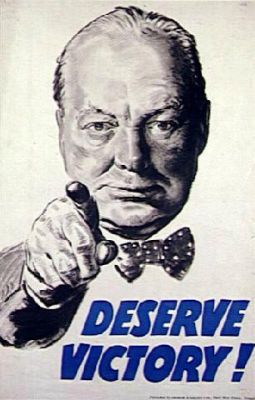
grammatical word: deserve

Today I have a verb for you which is very useful; it’s the word “deserve”. It is used when we want to say that a person should get something. It can be used in positive ways or negative ways.

So, a good person should get positive things – a good person deserves good things; a bad person should get negative things – a bad person deserves bad things.

However, life is often unfair, so sometimes good people get bad things even though they shouldn’t get them – good people sometimes get bad things, but they don’t deserve them. Bad people sometimes get good things that they shouldn’t get – bad people sometimes get good things that they don’t deserve.

Let me give you some specific examples:

I’m really happy for my co-worker! He just got a promotion. He works really hard, and he really deserves it!

My mother is such a wonderful woman. She really deserves to be happy!

That man killed many people. He deserves to be put in prison for a long time!

My boss just got demoted at work. He really deserved it because he’s so lazy!

My friend’s husband just left her for a younger woman. She doesn’t deserve to be treated like that. She was a loyal wife to him for a long time!

I think Jane was one of the best dancers in the competition, but she came in fifth place. She didn’t deserve such a low score!

My co-worker just got a raise he didn’t deserve. He’s only been with the company for six months!

The guy who stole my car only got only two weeks in prison. He didn’t deserve such a light sentence!

There are a couple of words here you may not know. In my fourth example, I use the word “demoted”. This is the opposite of “promoted”. In other words, the person was given a lower position at the company as a punishment.

In my seventh example, I use the word “raise”. This word is used to mean a higher salary.

Finally, in my last example, I used the word “sentence”. This word has two meanings. The first one you probably already know – a collection of words. However, in this case, the meaning is different. Here it means the punishment given to someone in a court of law.

grammatical word: almost

Today, I’d like to go over a word which my students usually use incorrectly: “almost”. I’m not sure about other languages, but in Japanese and Korean the word for “almost” has a slightly different grammar than it does in English. That is the reason why many people in those countries make mistakes when using it.

So, “almost” means “just less than” when talking about the quantity of something or the time. For example:

It’s almost 3:00 now.

The class is almost over.

There are almost 100 people who work in my department.

Almost 600 million people have gone to Disneyland since it first opened.

Almost all of the people at my company speak English well.

Almost everyone I know likes to watch movies.

Almost none of the people in my family have been overseas.

Almost nobody in the class could pass the test. I think only two people passed it.

So please note that if we use “almost” with a number, the number follows directly after “almost”. However, if we use “almost” with a noun such as “people”, we have to put another word between them; such words are often “all”, “every”, “no”, “none”, etc. We can also use it with words like “everyone” and “nobody”. However, we CANNOT say something like “Almost people in Japan like sushi.” Instead, we have to say something like:

Almost all people in Japan like sushi.

Almost every Japanese person likes sushi.

Almost everyone in Japan likes sushi.

The second way to use “almost” is when we want to talk about something which came close to happening but actually didn’t happen. For example:

My mother was in an accident. She almost died, but she’s going to be alright. 

My husband and I almost went to Italy for our honeymoon, but we decided to go to Hawaii instead.

Someone threw a rock at me. Luckily it didn’t hit me, but it almost did.

I was almost late for work today. I got to the office right at 9:00.

grammatical word: practically

Today, I’d like to talk about the adverb “practically” which is commonly used in English. It has the same meaning as “almost” but is a little more casual. Let me give you some examples:

I  have meetings at work practically every day.

My son is 18 years old now. He’s practically a man.

This cleaner is so effective. It can clean practically anything.

I ran in a marathon last week. It was so hard for me; I practically died.

In the case of the last sentence, this is an example of exaggeration. English speakers often do this in casual conversations. When the person says “I practically died.”, they don’t really mean to say they almost died. The true meaning is that they were extremely tired. Here are some other examples of exaggeration using “practically”:

That guy is so tall he’s practically a giant.

It was so windy yesterday my house practically blew down.

My cousin drives so fast. He practically breaks the speed of light when he’s driving.

grammatical word: besides

I hope everyone is having a good week. Today I would like to write about a word that is very useful in English. The word is “besides”, and it has two meanings.

We use the first meaning of “besides” when we want to say “except for”. In other words, we use it to exclude a certain thing from a group which it would usually go with. For example:

A: Paul just told me he can’t come to our party.

B: Ok. Is there anyone else besides Paul who can’t come?

Besides my parents, there’s no one in the world I love more than you.

I’m allergic to seafood, and Bill doesn’t like pork so, besides those two things, is there any other food we can’t serve?

A: I know you love Star Wars but, besides that, what’s your favorite movie?

B: Besides Star Wars it would have to be The Lord of the Rings.

The second way we use “besides” is to add more information when explaining why we feel a certain way about something. We use it when explaining the reason for something. For example:

I’m too tired to go to Dan’s party, and besides, I don’t really like him.

I turned down the promotion my boss offered me. It would have been too much responsibility, and besides, I like the job I have now.

I think you should join this class with me. You’ll be able to learn a lot of new things, and besides, you might meet some interesting new people.

I don’t mind getting older. I feel much wiser than I used to, and besides, people give me more respect.

Please be careful not to confuse “besides” with an S and “beside” without an S. The word “beside” simply means “next to”. One example would be, “The lamp is beside my bed so I can read at night.” By adding the S the meaning completely changes, so please be careful about S forms when studying English.

grammatical word: dread

I have a useful and interesting word for you today; it’s the verb “dread”.

The meaning is the opposite of “look forward to”. So when we say we are looking forward to something, it means that we are excited and interested about something we are going to do in the future. Therefore, when we say we are dreading something, it means that the activity is one which we have to do but really don’t want to do. For example:

I have a dental appointment tomorrow, and I’m really dreading it! I hate going to the dentist!

My mother-in-law is coming for a visit during the holiday. I always dread her visits because she doesn’t like me.

My annual work performance evaluation is next week. I’m really dreading it because my boss always gives me extra work to do afterwards.

I was dreading my blind date last night, but it wasn’t so bad. We actually liked each other and have another date next week.

This word is always used for negative situations. However, if we say “I was dreading…but…” (as in the last example) it means that we were expecting the situation to be bad, but it was surprisingly good.

If you’re not sure, a blind date is a date with a person you’ve never met before; the date is arranged by another person. In Western culture, people often dread blind dates because they don’t know what the other person’s personality or appearance is like.

grammatical word: right

The word for today is one which is used very often in conversations: “right”. It is used when we want to emphasize a location or time. For example:

The fitting rooms are right over there.

The bank is right next to the post office.

My favorite restaurant is right down this street.

The boss wants to see you right away.

We have to leave right now if we don’t want to be late.

The movie will begin right at 9:00.

So in the first three examples, the word “right” does NOT mean that the place is located on the right side. Instead, we use the word “right” to mean “directly” or “just”. We could also use the word “just” in these situations. For example:

The fitting rooms are just over there.

The bank is just next to the post office.

My favorite restaurant is just down this street.

In the fourth example, I use the expression “right away”. It is similar to “right now” but has a slightly different feeling. We say “right now” to mean at this exact moment, but we say “right away” to mean as soon as possible so now is the best time. We often use “right away” to talk about when we want something to begin, and we often use “right now” to talk about what is happening at a certain moment. For example:

I want to start the ABC project right away.

I’m working on the XYZ project right now.

Finally, in the last example, I used “right” when talking about a certain time. So “right at 9:00” means precisely at 9:00, not 8:59 and not 9:01, but exactly when it becomes 9:00.

grammatical word: blow

Today’s word is another verb which has various meanings and uses in the English language; the word is “blow”. Let me go over the various meanings for you.

1. for someone to force breath out of their mouth. For example:

If the soup is too hot, just blow on it. That should make it cool enough to eat.

To make the wheel turn on this toy you just have to blow on it.

2. for a person to expel mucus from their nose. For example:

You have a runny nose now. Take this tissue and blow your nose with it.

I hate it when people blow their noses really loudly in public.

3. for the wind to produce currents of air. For example:

The wind was blowing really strongly last night.

A light breeze is blowing now, so it’s a bit cooler than it was before.

4. for a tire to suddenly burst. For example:

One of the front tires of my car blew while I was driving to work this morning.

The tires on your car are really old. I hope they don’t blow while we’re driving to the mountains.

5. for a person to make a mistake and ruin an opportunity. For example:

I had a chance to date Sarah, but I asked her out while I was drunk. Now she won’t even talk to me. I really blew it.

If you pass this test, you can get into a really good university, so don’t blow it.

6. for a person to waste their money on something. For example:

My brother is so stupid. He goes to the bar every weekend and blows all his money on beer and gambling.

I blew my entire paycheck last month on a new flat screen TV, so now I don’t have enough money for my rent.

7. for a situation to be really unpleasant or bad. For example:

This party blows! Let’s go somewhere else and have some fun.

I think that new TV show totally blows! I watched one episode, and it was so stupid!

Please be aware that this last meaning for “blow” is only used in the present tense and is very casual. It should NOT be used in a formal or business situation. However, the other meanings can be used in any situation.

Next entries » · « Previous entries