Archive for grammatical word

grammatical word: hog

dont_hog_the_computer_pig_snout_mouse_pad-r2c181047a78a4ca9bdaba96220e09362_x74vi_8byvr_512

Today I have a fun word for you: “hog”. Some of you may know this word as a noun; the noun “hog” is an animal which is similar to a pig, only bigger. However, we can also use this word as a verb. The verb “hog”  is used when we want to talk about someone keeping something all for themselves and not sharing it with other people. For example:

Hey, stop hogging all the peanuts! The rest of us would like some too!

Mom! Peter is hogging all the toys! Tell him to stop it!

I hate going to karaoke with Janet because she always hogs the microphone.

When we use the word “hog” as a verb, it’s a little casual but it’s quite commonly used. We don’t usually usually use it in business situations unless we’re talking to someone in a casual way.

grammatical word: that

index

In English, we often use the word “that” to express the extent of something; it’s often used to express our feelings about something. The sentences we use that are like this are often negative. Let me give you some examples:

The movie I saw last night wasn’t that good. I was really disappointed!

Mary didn’t sing that well last night at the concert. She’s usually a good singer. I hope there’s nothing wrong with her.

These days, I’m not feeling well, and I can’t eat that much.

In these cases, the word “that” is similar to “so”. For example:

The movie I saw last night wasn’t so good.

Mary didn’t sing so well at the concert.

I can’t eat so much.

We can also use “that” when comparing our feelings about something with another person’s feelings about the same situation. We can also use it to correct someone’s mistake. For example:

A: I really loved the novel, A Song for Me. I thought it was amazing.

B: Well, I liked it, but I didn’t think it was that good.

________________________________________________________________

A: You’re about 60 years old now, right?

B: No, I’m not that old. I’m only 53.

________________________________________________________________

A: I heard you’re a great guitar player. Maybe you should play professionally.

B: Well, I’m good, but I’m not that good.

In these examples, the word “that” must be stressed strongly for the sentence to make sense. For exampe:

I didn’t think it was THAT good.

I’m not THAT old.

I’m good, but I’m not THAT good.

We can also use “that” in positive sentences in order to emphasize the extent of something in a positive way. For example:

I saw the movie, Inception last night and I loved it! I’m going to see it again today; it was that good!

The new video game from ABC Electronics is sold out at every store in the city; it’s that popular!

Vicky hates her ex-boyfriend! If someone even mentions his name, she gets angry; she hates him that much!

Once again, in these sentences the word “that” must be stressed or the sentence will not make sense. For example:

It was THAT good!

It’s THAT popular!

She hates him THAT much!

So when we use “that” in positive sentences in this way, there must be another sentence at the beginning to explain the situation. If we don’t do this, the sentence with “that” won’t make any sense.

grammatical word: thought

run-i-thought-they-said-rum.american-apparel-unisex-tank.athletic-grey.w760h760

Today, I have a word for you which can be confusing: “thought”. It can be confusing because sometimes it’s used when we want to say we made a mistake about something, and sometimes it’s used when we want to say we were correct about something. For example:

I made a big mistake at work today. I thought my boss told me to make 50 copies of the report, but actually he said 15.

I thought it would be cold today so I wore a heavy coat, but it turned out to be a warm day.

I thought going for Chinese food would be fun, but nobody else liked the idea.

In the above examples, the person is saying that they made a mistake. Here are some examples of how to use “thought” when we want to say we were right about something:

A: Mount Fuji is the tallest mountain in Japan, isn’t it?

B: Yes, that’s right.

A: I thought so.

_________________________________________________________________

A: Jennifer?

B: Steven! Oh my God! Long time no see!

A: I thought that was you! How have you been?

_________________________________________________________________

A: Going for Chinese food was a great idea!

B: I thought people would like it.

So, as you can see, when we use “thought” to say we were correct about something, it’s usually used as a response to another person’s  statement. Also, when we use this word about being correct, we have to stress the word much more strongly. Please compare the following two sentences:

I thought everyone would LIKE the party decorations.

I THOUGHT everyone would like the party decorations.

In the first sentence, the person means that they were wrong and that the people didn’t like the party decorations. In this case, we must stress the word “like”. In the second sentence, the person means that they were right and that the people did like the party decorations. In this case, we must stress the word “thought”.

grammatical word: albeit

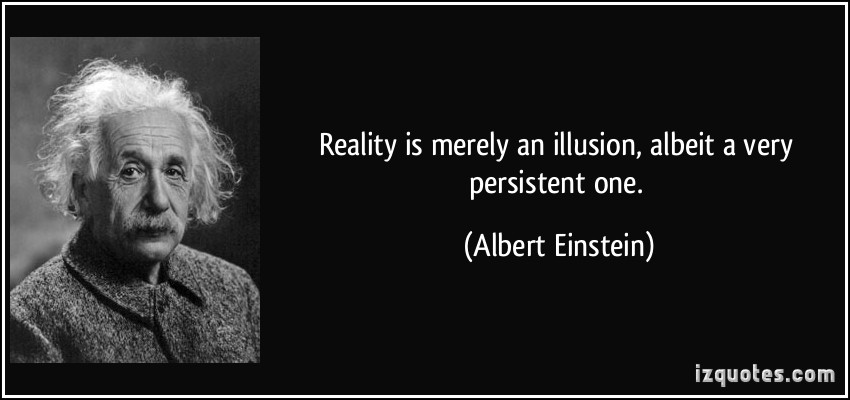
quote-reality-is-merely-an-illusion-albeit-a-very-persistent-one-albert-einstein-56420

Today I want to write about one of my favorite words in the English language: “albeit”. It’s a rather sophisticated way to say “although”, but the grammar in sentences using “albeit” is a little different. Also, the pronunciation of this word is /all BE it/. If you’re not sure about pronunciation, I recommend using The Free Dictionary online. The link for this site is on my blog. Each entry of The Free Dictionary has a pronunciation icon which will tell you the natural pronunciation of each word, usually both in British and American pronunciation.

Anyway, here are some examples of how to use “albeit”:

My friend just bought a very nice car, albeit a cheap one.

I’m having a house built. The builders are making progress with it, albeit very slowly.

Martin Richards is a novelist who writes very interesting, albeit strange, science fiction books.

Jake helped me with my project, albeit reluctantly.

So, as you can see, the word “albeit” is followed by either an adjective or an adverb. As I mentioned before, this is a rather sophisticated word in English, and even most English native speakers don’t use it. Generally speaking, highly educated people would use this word so, if you can use it correctly in a conversation, you will sound very intelligent! 🙂

grammatical word: would

key_art_what_would_you_do

For today’s blog entry, I want to go over a word that has various uses in the English language: “would”. There are six basic functions for this word, and I will explain each one and give you examples.

1. used to indicate imagined situations. For example:

If I were rich, I would travel all over the world.

If I were you, I wouldn’t smoke so much. It’s really not good for you.

I would drive to my hometown if I had a car.

2. used to indicate frequent actions in the past. This usage has the same meaning as “used to”. For example:

My family and I would have breakfast together every Sunday when I was young.

After school, my friends and I would play video games.

In the 1950s and before that, women would stay home with the children and the men would work. Nowadays, the situation has changed for many families.

3. used with “like” to express desires. In this case “would like” is a more polite way to say “want”. For example:

Would you like something to drink?

I would like you to do me a favor.

I would like a hamburger, and my daughter would like a cheeseburger.

4. used as the past tense form of “will” in reported speech. For example:

“I will never smoke.” (direct speech)

He said he would never smoke. (reported speech)

“Will you help me with my project?” (direct speech)

She asked me if I would help her with her project. (reported speech)

5. used as a polite form of the word “will”. This form is used when making requests. For example:

Would you be able to help me this afternoon?

Would you please stop tapping your pen on the table? It’s bothering me.

Do you think Cheryl would be able to work overtime tonight? We really need her.

6. used with a verb in questions in order to make the question sound softer and more polite. For example:

How much would a one-way ticket to Chicago cost? (more polite form of “How much does a one-way ticket to Chicago cost?”)

It would cost $80.00.

How long would it take to drive to Osaka? (more polite form of “How long does it take to drive to Osaka?”)

It would take about three hours.

Who would that be? (more polite form of “Who is that?”)

That would be my wife.

In these last examples, we can use “would” in the answers because the other person used “would” in the questions. However, if the person asking the question doesn’t use “would”, the answer should also not use “would”. In these situations, the use of “would” makes the sentences sound more formal.

As I’ve said in the past, the best way to improve your English and to master difficult words like “would” is to memorize complete sentences and then change the small details to make new sentences. In this way, you can think directly in English instead of translating from your native language. Good luck! 🙂

grammatical word: stop

images

Last week, I wrote about the different between “tried” + infinitive and “tried” + -ing. This week, I would like to do the same thing with the verb “stop”.

When we use “stop” + infinitive (“to” + base form of a verb), it means that we cease our current activity in order to do something else. When we use “stop” + gerund (-ing form of a verb), it means that we quit a certain activity forever. For example:

While I was driving to my hometown, I stopped to get something to eat.

I’m a little tired right now. Can we stop to relax for a few minutes?

A: Where’s Ben? I thought he was working.

B: He was, but he stopped to have a cigarette. He’ll be back in a few minutes.

Last year, my father stopped smoking. I’m so proud of him.

Would you please stop tapping your pen on the table? It’s really annoying!

My doctor tells me I should stop drinking so much beer, but I really love it!

The difference between these two forms is very important, so my suggestion is that you memorize the sentences and then change the small details to make new sentences. That way it will be less confusing for you, and the English structures will eventually become natural in your mind.

grammatical word: tried

tumblr_ma42r7nSLZ1rrtahqo2_400

I have noticed a common misunderstanding among my students with the word “try”. As most people know, this word means to attempt to do something. However, when we use it in the past tense, it can have two different meanings. If we follow the word “tried” with an infinitive (to + base form of a verb), it means that we failed to do something that we were attempting to do. However, if we follow it with a gerund (-ing form of a verb), it means that we successfully did the thing we were attempting but that the result was not what we wanted. For example:

It’s really hot in this room. I tried to open the window, but I couldn’t.

It’s really hot in this room. I tried opening the window, but it didn’t work.

In the first sentence, the person made an effort to open the window, but it didn’t open. In the second sentence, the person was able to open the window, but it didn’t cool the room down. Here are some more examples:

I tried to quit smoking last year, but it was too hard for me.

I tried to call you yesterday, but the line was busy.

We tried to get a reservation at the new Italian restaurant downtown, but we couldn’t. It must be very popular.

I have a headache. I tried taking this medicine, but I still have it.

I need someone to work for me on Friday. I tried asking Bill, but he said no.

I have a lot of ants in my house. I tried using this bug spray to kill them, but it didn’t work.

Some verbs can be followed by either the infinitive or the gerund forms of other verbs with no change in meaning. For example, this is the case with words like “like”, “love”, “don’t like” and “hate”. However, other verbs can only take one form or the other, but not both. This is the case with the verb “enjoy”. We can say, “I enjoy exercising.”, but we CANNOT say, “I enjoy to exercise.”

grammatical word: even

Groupe_Even

The word “even” is used very often in English, but most students don’t use it. I think that is because they are unsure of how to use it properly, so they avoid it. In today’s blog entry, I will explain it.

There are two basic ways to use this word as an adverb. The first one is used with comparative adjectives such as “better”, “worse”, “louder”, “more interesting”, etc. In these cases the word “even” means that the thing or person you are describing has become more intense than before, or something that is more intense than something else. For example:

My mom’s lasagna was always very good, but last week she added mushrooms to the recipe, and now it’s even better.

Your grades in high school were bad, but mine were even worse.

My old neighbors were very loud at night, but my new neighbors are even louder than the old ones. I’m going to make a complaint.

I loved the first season of that TV show. In the second season, the producers made some changes, and now it’s even more interesting than ever.

The second way we use “even” is when we are giving an example of an extreme situation and explaining that something that most people consider simple or normal is not a factor in that situation. For example:

My friend doesn’t know how to cook at all. She can’t even fry an egg.

Victor doesn’t like alcohol. He says even one sip of beer makes him feel sick.

I’m sorry, but we’re sold out of wine. There’s not even one bottle left.

My father hates travelling. He won’t even travel to his hometown one hour away.

So, in the first example, many people can’t cook, but most of them can still fry an egg. We use “even” to show that my friend is an extreme example of a person who can’t cook. In the second example, many people don’t like alcohol, but most of them won’t get sick after one sip of beer, so Victor is an extreme example of a person who doesn’t like alcohol. In the third example, we’re emphasizing that there are no bottles of wine left by saying that there’s “not even one bottle left”. In the fourth example, many people hate travelling especially long distances but most of them are willing to drive one hour. However, my father is example of a person that won’t do that simple thing, so we use “even” to emphasize this fact.

grammatical word: put

How+do+I+put+this_dc5afd_3550552

As I have explained before, many common verbs in English have more than one meaning. The verb “put” has many subtle meanings, but the main definition is to place something in a certain location. There is another meaning which most people don’t know about though; it also means to say something in a certain way. For example:

My sister is very articulate. She always puts things in a very impressive way.

A: I thought the movie was really stupid!

B: Well, that’s not how I’d put it, but I didn’t really enjoy it either.

A: Well, how would you put it then?

B: I’d say it was disappointing rather than stupid.

________________________________________________________________

A: I asked Cary if he liked you and he said that he did.

B: Really? He likes me? How exactly did he put it?

A: He said that he thought you were really pretty and cool.

So I hope this is clear to everyone. The word “articulate” in the first example means that a person can speak very well in their own language. You can check my blog entry from April 30th, 2010 for more examples. If anyone is interested in the other meanings for “put”, they can look up the word at The Free Dictionary; the website link is on this blog page.

grammatical word: can

index

Today, I’d like to write about another word with a second meaning that most people don’t realize: “can”. The main meaning of the word “can” is to talk about skills that we have. For example:

I can play the piano very well.

My friend can cook French food.

However, the word “can” also has the meaning of “sometimes”. For example:

It can get really cold in my hometown in the winter.

My sister can be really blunt, but she’s not blunt all the time.

Learning how to cook well can be really difficult for some people.

When we talking about actions, we use the word “sometimes”, but we use the word “can” when describing a person or a situation with adjectives. However, we can also use the word “sometimes” in these situations. For example:

It is sometimes really cold in my hometown in the winter.

My sister is sometimes very blunt, but she’s not blunt all the time.

Learning how to cook well is sometimes very difficult for some people.

So, it’s possible to use “sometimes” in these sentences, but it’s more natural to use the word “can” because the sentences are describing a situation using adjectives.

Next entries » · « Previous entries