grammatical word: albeit

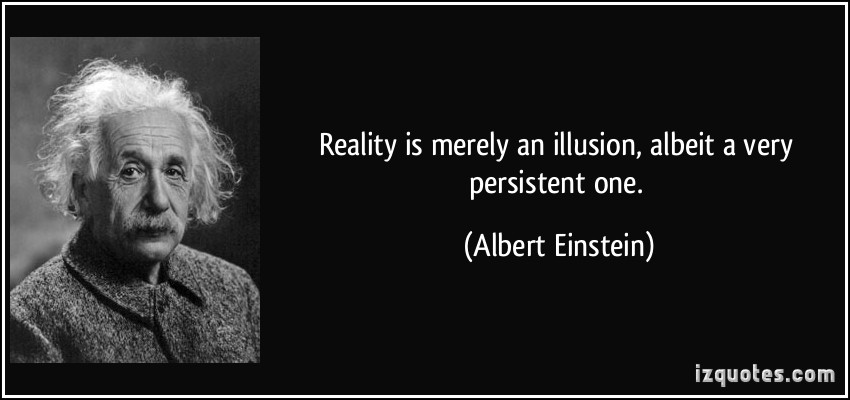
quote-reality-is-merely-an-illusion-albeit-a-very-persistent-one-albert-einstein-56420

Today I want to write about one of my favorite words in the English language: “albeit”. It’s a rather sophisticated way to say “although”, but the grammar in sentences using “albeit” is a little different. Also, the pronunciation of this word is /all BE it/. If you’re not sure about pronunciation, I recommend using The Free Dictionary online. The link for this site is on my blog. Each entry of The Free Dictionary has a pronunciation icon which will tell you the natural pronunciation of each word, usually both in British and American pronunciation.

Anyway, here are some examples of how to use “albeit”:

My friend just bought a very nice car, albeit a cheap one.

I’m having a house built. The builders are making progress with it, albeit very slowly.

Martin Richards is a novelist who writes very interesting, albeit strange, science fiction books.

Jake helped me with my project, albeit reluctantly.

So, as you can see, the word “albeit” is followed by either an adjective or an adverb. As I mentioned before, this is a rather sophisticated word in English, and even most English native speakers don’t use it. Generally speaking, highly educated people would use this word so, if you can use it correctly in a conversation, you will sound very intelligent! 🙂

the difference between words: will and going to

future-will-future-be-going-to

Today I have a rather long entry for you about the difference between two very similar terms: “will” and “going to”. In many cases, English speakers use either of these to express the future. However, there is a slight difference in nuance. The term “going to” gives the listener the idea that someone has made the decision to do something after giving it careful thought. The word “will” is used when we are a little uncertain or when there’s no time to think carefully about doing something in the future. For example:

This weekend my friend and I are going to see the U2 concert. We’ve been planning it for weeks.

I‘m going to go on a business trip next week. My boss told me about it a few days ago.

My sister is probably going to have her baby next week. She’s very excited.

In the first example, we use “going to” because the friends have already made the decision to see the concert. In the second example, we use it because the person has been aware of the business trip for a while, so it’s now an established plan. In the third example, we use it because we know that the sister will have the baby soon, and it’s expected. However, we could also use say, “My sister will probably have her baby next week.” because it’s uncertain about the timing, and the people can’t make a decision about when the baby will be born. So, in this case, both “will” and “going to” are fine.

Here are some more examples of how to use “will”:

I think I’ll go to the beach to relax this weekend.

A: The phone is ringing.

B: Don’t get up. I’ll answer it.

_________________________________________________________________

A: I need someone to write the report for the ABC project.

B: I’ll do it.

_________________________________________________________________

A: Are you ready to order?

B: Yes. I’ll have a sirloin steak and a baked potato please.

In the first example, we use “will” because of the word “think”. This shows the person is not completely certain, so a firm decision has not been made. Once the decision is made, the person would say, “I’m going to go to the beach to relax this weekend”. In the second example, the phone suddenly rings and there is no time for the person to think about whether or not to answer it. In these types of situations, we always use “will”. The third example is similar. The person has no time to think about volunteering, so he uses “will”. However, after this the person would say, “I’m going to write the report for the ABC project.” because the decision has been made firmly. In the last example, when we are ordering a meal from a waiter or waitress in a restaurant, we always use “will have”. This is a standard expression for ordering food. However, when we are buying something in a store, we use “will take” to talk about buying something. For example:

A: How may I help you?

B:I’ll take these two rings and this necklace please.

If we use “going to have” or “going to take” in a restaurant or store, it will sound strange. So we use “will have” and “will take” when we are talking to the staff member who works in that place. However, when we are talking to a friend or family member, we use “going to have” or “going to take”. For example:

A: Have you decided what you want for dinner?

B: Yes, I’m going to have a sirloin steak and a baked potato. Let’s call the waiter over.

_________________________________________________________________

A: Are you going to buy some jewelry?

B: Yes. I’m going to take these two rings and this necklace.

So, these are the basic differences between “will” and “going to”. It’s very complicated, so my advise, as always, is to memorize complete sentences and change the small details in order to create new sentences. In this way, you’ll start to understand when it’s appropriate to use “will” and when it’s appropriate to use “going to”. Good luck!
idiom: to get a/my second wind

index

Last night, when I was with one of my friends, I found myself using an idiom that’s quite useful: “to get my second wind”. We can also say “to get a second wind”. The meaning of this idiom is that we experience a renewed sense of energy after being tired or sleepy. For example:

I was really tired last night at the nightclub, but I got a second wind at around 1:00 a.m. After that, I was able to dance for another two hours!

A: Are you ok to do the presentation? You looked really sleepy a little while ago.

B: I’m ok now. I got my second wind a few minutes ago.

I’m always sleepy after I eat lunch, but I usually get a second wind at about 2:00 p.m.

Somebody once asked me if this feeling of renewed energy is always natural or if it’s induced by doing something such as drinking caffeine. It’s a good question and, in my opinion, I would say it’s a natural feeling that is not induced by any chemicals. However, when we get more energy after drinking something, we could say something like:

If I’m sleepy at work, I drink some coffee and it always gives me a second wind.

It’s possible to use this kind of expression: for something to give one a second wind. However, again in my opinion, that’s not used so much in English. In these situation, I think more people would use the phrasal verbs: “pick up” or “perk up”. For example:

If I’m sleepy at work, I drink some coffee and that always picks me up.

I was sleepy after lunch, so I drank some Coke and it really perked me up.

I hope that everyone is having a great week!

separable phrasal verb: set up

Set_Up

This week’s phrasal verb is “set up”, and it has five different meanings.

1. to assemble or prepare something for use. For example:

Can you help me set up the computer? I don’t know how to do it.

My computer needs to be set up. Can you help me? (passive voice)

We have to set up everything for the party by 5:00.

Everything has to be set up for the party by 5:00. (passive voice)

2. to frame someone for a crime. For example:

I swear I didn’t kill those people! Someone else did it and then set me up!

In the movie, the main character was set up for some murders. (passive voice)

3. to establish something (often a business). For example:

I want to set up my own business, but I know it’s going to be difficult.

The billionaire set up a charity in order to help handicapped people.

The charity was set up by a billionaire in order to help handicapped people. (passive voice)

4. to establish someone in business. For example:

My uncle set me up in the restaurant business. I couldn’t have done it without his financial support.

I was set up in the restaurant business by my uncle. (passive voice)

5. to arrange a blind date for someone. For example:

Can you set me up with your cousin? I think she’s really pretty.

My friend wants me to set him up with my cousin.

The second meaning for this phrasal verb (to frame someone for a crime) is the type of language that we only hear in a movie or TV show. We can also use it when talking about a movie or TV show, but obviously most of use wouldn’t use it in our everyday lives. Also, please be careful to use the preposition “with” when using the final meaning (to arrange a blind date for someone). If you don’t know, a “blind date” is a date with someone that you’ve never met before, and which is usually arranged by another person.

grammatical expression: (not) as far as I know

4778388-1x1-700x700

Today I would like to go over the expression: “as far as I know”. We can also use this expression in the negative: “not as far as I know”. This is used  when we want to talk about our knowledge of a certain situation but emphasize that we might be wrong about it because of a lack of knowledge. For example:

A: Where’s your boss right now?

B: As far as I know, he’s still in the budget meeting.

_________________________________________________________________

A: How much is this table? Is the price still the same as it was last year?

B: As far as I know it is, but I’ll have to check to make sure.

_________________________________________________________________

A: Does James have any children?

B: Not as far as I know. I’m pretty sure it’s just him and his wife.

_________________________________________________________________

A: Do you have any allergies?

B: No, not as far as I know. The last time I had a checkup they didn’t say that I had any.

So, as you can see, this expression is often used in reponding to someone’s question. In all of these examples, person B is saying that to their knowledge as this point in time, the boss is still in the meeting, the price of the table is the same, James doesn’t have any children and they don’t have any allergies. However, they could be wrong about these things if something has changed without their knowledge.

adjective: shallow

index

The adjective I would like to write about this week is “shallow”. It has two meanings in English.

1. for some kind of liquid (usually water) to not be deep. For example:

The water in the swimming pool is very shallow, so you don’t have to be scared of drowning.

The lake is very shallow around the edge, but about ten meters in the lake floor becomes much deeper.

2. for a person to only care about surface things such as beauty or money. For example:

Lucy is a really shallow woman. She won’t date any guys who aren’t rich.

Jeremy is extremely shallow. He only dates women who are very beautiful. Most of his girlfriends are really dumb, but he doesn’t care about that.

Another word that has the same meaning as “shallow”‘s second meaning is “superficial”. However, the word “shallow” sounds slightly more casual and conversational than “superficial”.

grammatical word: would

key_art_what_would_you_do

For today’s blog entry, I want to go over a word that has various uses in the English language: “would”. There are six basic functions for this word, and I will explain each one and give you examples.

1. used to indicate imagined situations. For example:

If I were rich, I would travel all over the world.

If I were you, I wouldn’t smoke so much. It’s really not good for you.

I would drive to my hometown if I had a car.

2. used to indicate frequent actions in the past. This usage has the same meaning as “used to”. For example:

My family and I would have breakfast together every Sunday when I was young.

After school, my friends and I would play video games.

In the 1950s and before that, women would stay home with the children and the men would work. Nowadays, the situation has changed for many families.

3. used with “like” to express desires. In this case “would like” is a more polite way to say “want”. For example:

Would you like something to drink?

I would like you to do me a favor.

I would like a hamburger, and my daughter would like a cheeseburger.

4. used as the past tense form of “will” in reported speech. For example:

“I will never smoke.” (direct speech)

He said he would never smoke. (reported speech)

“Will you help me with my project?” (direct speech)

She asked me if I would help her with her project. (reported speech)

5. used as a polite form of the word “will”. This form is used when making requests. For example:

Would you be able to help me this afternoon?

Would you please stop tapping your pen on the table? It’s bothering me.

Do you think Cheryl would be able to work overtime tonight? We really need her.

6. used with a verb in questions in order to make the question sound softer and more polite. For example:

How much would a one-way ticket to Chicago cost? (more polite form of “How much does a one-way ticket to Chicago cost?”)

It would cost $80.00.

How long would it take to drive to Osaka? (more polite form of “How long does it take to drive to Osaka?”)

It would take about three hours.

Who would that be? (more polite form of “Who is that?”)

That would be my wife.

In these last examples, we can use “would” in the answers because the other person used “would” in the questions. However, if the person asking the question doesn’t use “would”, the answer should also not use “would”. In these situations, the use of “would” makes the sentences sound more formal.

As I’ve said in the past, the best way to improve your English and to master difficult words like “would” is to memorize complete sentences and then change the small details to make new sentences. In this way, you can think directly in English instead of translating from your native language. Good luck! 🙂

the difference between words: recently and these days

20110325-RECENTLY

In my classes, many times I have had to explain the difference between “recently” and “these days”, so that will be the subject for today’s blog entry.

The word “recently” is used to focus on the present moment and the recent past, but it does NOT focus on the future at all. The term “these days” is used to focus on the recent past, the present moment AND the near future. For example:

Recently, I’ve been working a lot of overtime at work.

I’ve recently found a fantasic new Italian restaurant downtown. We should go there sometime.

Recently, I saw the movie Star Wars for the first time. It was really good.

These days, I’m working a lot of overtime.

I don’t drink much beer these days. I’m trying to lose weight.

I’m studying English very hard these days. I want to get a high score on the TOEIC test.

So, because the word “recently” doesn’t focus on the future at all, it uses different verb tenses from “these days”. The word “recently” will use the present perfect (have + pp), the present perfect continuous (have been + ing form of a verb) or the simple past tense. On the other hand, “these days” will use the present continuous (be + ing form of a verb) or the simple present.

idiom: to be hit and miss

gone-girl

I hope everyone is having a great Sunday. The idiom for this week is “to be hit and miss”. It is used to talk about either the quality of something or a person’s rate of success at something. When we use this expression, we are saying the the quality of something is sometimes good and sometimes bad, or that someone is sometimes successful at doing something and sometimes not. For example:

The quality of the food at this restaurant is very hit and miss, so I’d rather go somewhere else.

These days, the quality of Jim Harmon’s movies is really hit and miss. He used to make consistently good films though.

Drew Littleton’s game is really hit and miss right now. He used to be a much better golfer.

Chris used to be the top salesman at ABC Company, but nowadays his sales performance is extremely hit and miss.

When we use this expression, it’s very common to add the words “very”, “really”, or “extremely” at the beginning of the idiom. If anyone has any questions, please let me know.

inseparable phrasal verb: feel up to

Sick-person

Today I have a phrasal verb for you that is quite simple but very useful and commonly used: “feel up to”. It is used when we talk about having enough energy or being healthy enough to do something. For example:

I want to go to the party with you, but I have a cold. I’m just not feeling up to it. Sorry.

Are you feeling up to cooking tonight? If you’re too tired, we can order a pizza.

A: If you’re not feeling well, we don’t have to go out for dinner.

B: It’s ok. I had a headache before but it’s gone. I think I’m feeling up to going out now.

Do we have to invite Dan to our party? He always talks shop, and I’m really not feeling up to hearing him complain about his job.

If you feel up to it, I’d like you to help me cook dinner.

With this expression, it’s much more common to use it in negative sentences or in questions. It’s a little unusual to say “I’m feeling up to going out tonight.”, but sometimes we can add “I think” to the beginning of the sentence and that makes it sound more natural (as in the third example sentence). So, instead of saying “I’m up to going out tonight”, we would probably say something like, “I want to go out tonight.” or “I feel like going out tonight.”

In the fourth example, I use the idiom “talk shop”. If you don’t know this expression, you can check my blog from June 2, 2010.

Newer entries » · « Older entries