Archive for adjectives

adjective: shallow

index

The adjective I would like to write about this week is “shallow”. It has two meanings in English.

1. for some kind of liquid (usually water) to not be deep. For example:

The water in the swimming pool is very shallow, so you don’t have to be scared of drowning.

The lake is very shallow around the edge, but about ten meters in the lake floor becomes much deeper.

2. for a person to only care about surface things such as beauty or money. For example:

Lucy is a really shallow woman. She won’t date any guys who aren’t rich.

Jeremy is extremely shallow. He only dates women who are very beautiful. Most of his girlfriends are really dumb, but he doesn’t care about that.

Another word that has the same meaning as “shallow”‘s second meaning is “superficial”. However, the word “shallow” sounds slightly more casual and conversational than “superficial”.

adjective: fine

fine

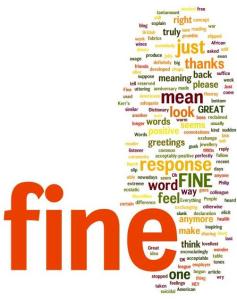
Today, I’d like to write about a word that many of my students use but don’t fully understand: “fine”. Whenever I ask a Japanese person, “How are you?”, almost all of them reply, “I’m fine, thank you. And you?” Now technically this is correct, but native English speakers almost NEVER say, “I’m fine, thank you. And you?” Instead, we will say things like:

I’m great. How about you?

I’m good. You?

Pretty good. Yourself?

I’m not bad. And you?

Sometimes we say, “I’m fine”, but the above examples are more natural, in my opinion. However, if someone is concerned about our physical or emotional well being and asks us, “Are you ok?”, we often say “I’m fine.” to tell them that they don’t have to worry about us, and that we’re ok.

Now, there is another misunderstanding about “fine”. Generally speaking, when we say something is “fine”, the feeling is neutral, but not extremely positive. For example:

A: How was your day?

B: It was fine.

A: Just fine? Is there something wrong?

_______________________________________________________________

A: Did you enjoy the party?

B: It was fine.

A: Only fine? I thought it was really fun.

However, sometimes the word “fine” can have a much more positive feeling when we use it. These cases are more rare and sound a little old-fashioned. For example:

George is a fine man and you’re very lucky to have a husband like him!

It’s a fine ring that you bought your fiancee. I’m sure she’ll love it.

When we use “fine” in this way, we must stress the word “fine” in order to indicate that it’s very positive. Also, it’s important to note that when “fine” is used positively, it must come in front of a noun. Therefore, if we say, “The ring you bought your fiancee is fine.”, it sounds like we’re saying it’s just ok.

Finally, many of my students use “fine” to talk about the weather. For example:

The weather is fine today.

It’s a fine day today.

This is not natural in North American English, although I did hear people say things like that in Australia, so perhaps it’s more British English. In the United States and Canada, it’s more natural to use the word “nice” to describe good weather conditions. For example:

The weather is nice today.

It’s a nice day today.

So, I hope this clears up some of the misunderstandings about the word “fine”.

adjective: clumsy

images

Wednesday is adjective day. So today, I’d like to write about the word “clumsy”. In English, it has two meanings:

1. a person who has trouble controlling their physical movements and who drops things or falls down by accident. For example:

My sister is really clumsy. She’s always hurting herself by accident. Sometimes I worry about her.

I’m sorry for spilling wine on your carpet. I’m so clumsy today.

A: Who’s the clumsiest person in your family?

B: It’s my father. My mother won’t let him wash the dishes now because he often drops the glasses.

2. something that is badly constructed or made. For example:

The artist’s earlier paintings are quite clumsy in comparison with his later work.

Many of the sentences in your essay are clumsy and too long. I’d like you to rewrite them.

The construction company got a bad reputation because they did clumsy work on many of their previous buildings.

When we talk about a person being clumsy, sometimes it’s a general condition (as in the first and third example sentences), and sometimes it’s a temporary condition (as in the second example sentence). I think most people are clumsy sometimes, but only a few people are clumsy all the time.

adjective: skeptical

Skeptical Baby Temp

Today I’d like to write about the adjective “skeptical”. It is used to talk about a person having a doubt about someone or something. For example:

I’m very skeptical that the prime minister will lower taxes like he said he would.

Jack said he would help me move this weekend, but I’m pretty skeptical that he’ll actually do it. He usually breaks his promises.

Some people are skeptical about global warming, but I think it’s true.

A: I don’t think Henry will do a good job on this project.

B: Don’t be so skeptical. I have faith in him.

As I mentioned before, “skeptical” is used about people having a doubt, so we say a person is skeptical about someone or something. We DON’T say the situation is skeptical, so we CANNOT say that “Global warming is skeptical.”; we must say, “I’m skeptical about global warming.”

By the way, for the record, I’m NOT skeptical about global warming. I think it’s true.

adjective: thoughtful

index

The adjective for this week is one which is often misunderstood. Many people think that the word “thoughtful” means that someone thinks a lot about various things, but this is not the accurate meaning. This word is actually used to talk about a person who thinks about another person’s feelings and does something nice for them in order to be kind. For example:

My aunt is such a thoughtful person. She often sends me things that she thinks I will like.

A: I brought you a blanket because I thought you might be cold.

B: Thank you! That’s so thoughtful of you!

________________________________________________________________

A: Is Mr. Parker a thoughtful boss?

B: Well, not always but, last week, he let me go home early because I had a headache. That was very thoughtful of him.

It’s important to note that when a person is being thoughtful, they do the nice thing voluntarily; they don’t do it because someone asked them to do it. Therefore, in the first example, the person did NOT ask the aunt to send her anything; in the second example, the person did NOT ask for a blanket; and in the third example, the person did NOT ask the boss to go home early.

adjective: diligent

index

I was recently explaining the meaning of the adjective “diligent” to a student, so I thought it would make a good entry for my blog. The word “diligent” is similar to “hard-working”, but it’s a little different. The word “hard-working” means that someone works a lot in a general way, but “diligent” is used when talking about a specific activity that someone always does when they’re supposed to do it. For example:

I’m very diligent about brushing my teeth three times a day. I think it’s very important to take care of your teeth.

I’m not very diligent about dusting my living room. I should do it at least once a week, but sometimes I get lazy and don’t do it for a long time.

It’s very important that you be diligent about filing the invoices. If you don’t do it everyday, we can lose track of them very easily.

So, as you can see, we always use the word “about” after “diligent”, and then it is followed the -ing form of a verb.

adjective: wishy-washy

Wishy_Washy

The adjective I have for you today is “wishy-washy”. It is used when we want to talk about a person who is often changing their mind about things or who can’t make definite decisions. Therefore, if you call someone wishy-washy, it’s a negative thing to say about them. For example:

I don’t like Oscar because he’s so wishy-washy. He just agrees with other people’s opinions, but he doesn’t seem to have any opinions of his own.

Many of today’s politicians are so wishy-washy. They start certain programs, but they change to other projects without finishing what they started.

A: I think Rachel is so wishy-washy. What do you think of her?

B: I wouldn’t say she’s wishy-washy. She just doesn’t have a lot of self-confidence.

When we use this word, it sounds a little bit casual. Also, because it’s quite negative, we would never call another person wishy-washy directly to their face. It would be extremely rude!

adjective: sensitive

670px-Get-Your-Overly-Sensitive-Boyfriend-to-Dump-You-Step-3

Today, I would like to write about another common adjective: “sensitive”. It has three main meanings.

1. for some part of a person’s body to be easily damaged or irritated. For example:

My skin is very sensitive to the sun, so I get a sunburn easily.

My eyes are sensitive to light, so I have to wear sunglasses if it’s a bright day.

I have a really sensitive stomach. If any food is even a little spicy, I get a stomachache.

2. for a person to be very easily hurt by someone else’s words. For example:

Why did you call Teresa fat? You know how sensitive she is about her weight!

Wow, that girl is really sensitive! I just said I didn’t like her dress and she started crying.

My husband is too sensitive. If you criticize him even a little, he gets very upset.

3. for a person to consider other people’s feelings. For example:

My sister wants to find a boyfriend who’s kind and sensitive. Her last boyfriend never thought about her feelings at all.

Bill hasn’t been very nice recently but his wife is sick, so we have to be sensitive when talking to him.

The first two meanings of “sensitive” are a little negative, but the last meaning is positive. I hope that everyone understands how to use this word in all of its meanings now.

adjective: handy

HappyTreeFriends-handy

The adjective for today is “handy”. There are three meanings for this word.

1. something that is useful or convenient to use. For example:

A hammer and screwdriver are handy tools to have around the house.

Cell phones are really handy because they have so many different functions including Internet access.

2. something that is easy to access. For example:

I always keep my medicine in a handy place in case I need it.

I might need this book later, so please keep it handy.

3. someone who is very skillful at fixing or making things with their hands. For example:

My father is very handy with tools. He can fix almost anything.

You made that shelf? Wow! I didn’t know you were so handy.

adjective: furious

angry01

Today’s adjective is “furious”. It is used when we want to say someone is very, very angry about something. For example:

I was furious when I found out that my brother had borrowed my car without asking me.

All the employees are furious about that paycut. Many of them are saying they want to quit their jobs.

My father was furious about his boss making him work overtime on the weekend of his birthday.

The preposition “about” must be used after “furious” if it is followed by a noun or by -ing. Also, the word “furious” is very strong in meaning, so it is unnatural to say “very furious”. Sometimes people will say “really furious”, but usually people will use the adjective by itself.

Next entries » · « Previous entries