Archive for June, 2011

grammatical word: make (part 1)

https://i0.wp.com/whatscookingamerica.net/Eggs/ScrambledEgg.jpg

Recently, I wrote a series of blogs about the verb “get”. I’d like to do the same thing today with the verb “make”. Here are the first few ways in which we can use “make”:

1. to create something. For example:

My sister makes her own clothes. I think they look really nice.

I made this table in high school, and my parents still use it in their house.

2. to prepare a meal. For example:

I’ll make you some scrambled eggs for breakfast.

I don’t feel like making dinner tonight. Let’s go out instead.

3. to fold the covers neatly on a bed after sleeping in it. For example:

I make my bed every morning, so it always looks neat.

My mother got mad at me because I forgot to make my bed.

4. to use a telephone to call someone. For example:

I have a few phone calls to make. Would you please excuse me?

I made a few calls yesterday to people I know, and I found someone who can give you a job.

5. to earn money. For example:

How much money do you make?

I didn’t make much money last year, so I need to find a better paying job.

6. to get new friends. For example:

I want to make some new friends.

My sister is very shy, so she finds it difficult to make friends.

7. to score a point in a sports game. For example:

Jim Peterson just made an amazing goal! Did you see it?

The Dallas Cowboys need to make this touchdown in order to win the game.

8. to reach a decision. For example:

I’ve made the decision to quit my job and go back to school.

Which restaurant shall we go to? I’m really hungry, so can we please make a decision now?

These are the first few ways we can use the verb “make”. I’ll continue with this series next week.
the difference between words: don’t mind and don’t care

https://englishhelponline.me/wp-content/uploads/2011/06/6a00d83451c49a69e201538e1ed9d6970b-320wi.jpg?w=247

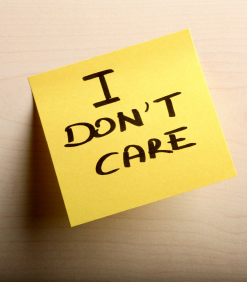
Many of my students have asked me to explain the difference between “don’t mind” and “don’t care”, so I will do that today. We can often use “don’t mind” and “don’t care” in the same situations, but “don’t mind” sounds much softer than “don’t care”. For example:

I don’t mind which restaurant we go to. It’s up to you.

I don’t care which restaurant we go to. It’s up to you.

I don’t mind if Jeff comes to the party.

I don’t care if Jeff comes to the party.

I don’t mind if you smoke. Please go ahead.

I don’t care if you smoke. Please go ahead.

Peter made a joke about my weight, but I don’t mind.

Peter made a joke about my weight, but I don’t care.

In these situations, “don’t mind” sounds very polite and gentle. It’s like the person is saying “It’s ok with me.”; however, “don’t care” sounds stronger and it’s like the person is saying, “It doesn’t matter to me”.

In addition, we can use “don’t care” in ways that we cannot use “don’t mind”. In these cases, it means there is a lack of interest in something or someone. For example:

I don’t care about Hollywood celebrities. I’m not interested in their lives at all.

My girlfriend doesn’t care about me anymore. Last night, she broke up with me.

That restaurant obviously doesn’t care about the quality of their food. Everything we ordered tasted terrible.

As you can see from my examples, we always use the preposition “about” after “care” in these situations.

Today is my 400th blog entry for English Help Online! I have now been writing the English Help Online blog for over a year and three months. I would like to thank my readers for all your questions and kind comments. I hope I can continue to help you with your English studies! If you know someone who wants or needs to study English, please tell them about my blog.

idiom: a rain check

https://i0.wp.com/esl.culips.com/wp-content/uploads/2009/06/raincheck.jpg

This week’s idiom is a very interesting one. It is “a rain check”, and we use it when someone invites us to do something. We want to do it but we can’t, so we use this expression to tell them we would like to do it at another time in the future. For example:

A: Would you like to have a drink with me after work?

B: I’d love to, but I have other plans. I’ll take a rain check though.

A: Ok.

_________________________________________________________________

A: Do you want to go bowling with me and my friends on Friday night?

B: That sounds fun, but I have to work Friday night. How about a rain check?

A: Ok.

_________________________________________________________________

A: How about coming over to my house for dinner tonight?

B: That would be wonderful, but I’m going to a movie with my friend. Can I have a rain check?

A: Sure, no problem.

_________________________________________________________________

A: Why don’t you join my friends and me for karaoke tomorrow night?

B: I love karaoke, but I’ve already made plans. Rain check?

A: Sure.

I believe this expression comes from baseball. Many years ago, no baseball stadiums were covered and so when it rained, the game had to be cancelled. Instead of giving people their money back for their tickets, they would give them another ticket called a “rain check” which meant they could come back at another time in the future to watch another baseball game. Now the meaning has been expanded to cover any activities we can’t do now but want to do in the future.

separable phrasal verb: put off

images

Today’s phrasal verb is “put off”, and it has four meanings. The first three are a little similar, but the last one is quite different.

1. to postpone something. For example:

I can’t come to the meeting at 3:00. Can we put it off until 4:00?

The meeting has been put off until 4:00. (passive voice)

It’s raining now, so I’m going to put off my barbeque until next weekend.

The barbeque will be put off until next weekend because of the rain. (passive voice)

2. to delay doing something we don’t want to do. For example:

You should go and tell Bob that he’s fired now. You can’t put it off forever.

You should go and tell Bob that he’s fired now. It can’t be put off forever. (passive voice)

You need to clean up the basement today! You’ve been putting it off for far too long!

3. to persuade someone to agree to a delay. For example:

I can put off the boss for another two days or so, but that’s it. We’ll need to have made a decision by then.

The boss can’t be put off for much longer. We have to make a decision soon. (passive voice)

I’ll try to put off my teacher for two more days, so I can finish writing my paper.

4. for someone’s manners or behavior to make other people uncomfortable. For example:

Jerry is a very blunt person. He can really put people off with some of the comments he makes.

People can be really put off by Jerry’s bluntness. (passive voice)

The way my sister’s boyfriend was talking to her really put me off. I hope she doesn’t keep dating him.

I was really put off by the way my sister’s boyfriend was talking to her. I hope she doesn’t keeping dating him. (passive voice)

So, as you can see, we often use this phrasal verb in the passive voice. This is especially true for the last meaning. It’s very common for people to say, “I was put off by…”. If you don’t know what the adjective “blunt” means, I wrote a blog about it last year.

If you want to look for any particular words or expressions on my blog, don’t forget there is a search function at the top.

grammatical expression: last but not least

last

This week’s grammatical expression is “last but not least”, and we use it when we are introducing the last person or group in a series. It’s like saying, this is the last person or group, but they are not the least important one even though they are last. For example:

Thank you Nancy for your presentation. And last but not least, we have Edward, and he will be giving a presentation about global economics.

There will be three bands playing: First, Drive Shaft will play; then, we will hear a song from The Ravens and, last but not least, The Paper Dolls will play some of their songs.

I ate a lot of great food at the party. I had Bill’s potato salad, Susan’s tomato soup and, last but not least, Artie’s fried chicken. They were all delicious.

We use this expression in order to be polite to the last person or group and not make them feel badly about being last.

adjective: affectionate

https://i0.wp.com/www.widescreenwallpapers.org/wallpapers/preview/a/f/affectionate-cheetahs-1.jpg

Today’s adjective is “affectionate”, and it is used to describe a person who shows their love for another person through physical touch or with their words. For example:

I love to hug my friends, so I’m a very affectionate person.

Were your parents very affectionate with you when you were a child?

My husband isn’t very affectionate, especially in public. He won’t even hold my hand when we’re out.

My parents are still very affectionate with each other. Even after 30 years together, they still say I love you to each other.

Generally speaking, Japanese people are not as affectionate as European people, but I have a Japanese friend who’s very affectionate.

Please be careful with the pronunciation of this word. As I’ve mentioned before, all English adjectives ending in -ate have the pronunciation of /it/. Therefore, this word is pronounced /af FEK shun it/. If you’re not sure, you can check it with The Free Dictionary. There is a pronunciation icon for every word with both British and American pronunciation. The link for that site is on my blog.

Next entries »