Archive for July, 2011

grammatical expression: end of story

https://i0.wp.com/www.heartwarmers.co.uk/csi/433094656/i/plt/end_of_story.jpg

Today’s grammatical expression is “end of story”. It is used when we make a statement about something and we feel there is nothing more to be said about it. This is because we think the statement contains such truth that nobody could argue against it. For example:

Angelo’s Pizza Shop has the best pizza in this city. End of story.

If you invest in this company, you’ll make a lot of money. End of story.

People who are happy don’t treat other people badly. End of story.

A: Why did Oscar buy that car? It’s so old and ugly.

B: He bought it because it was cheap, and he hates to spend money. End of story.

This expression is generally used in conversation or in casual writing, but we don’t usually use it in formal writing. We can use this expression to express a personal opinion that we believe strongly or something that is considered a universal truth, as in my third example.

adjective: compassionate

https://i0.wp.com/www.engagemagazine.com/MissionMagazine/media/ArticlePhotos/NCM-logo.jpg

Today’s adjective is “compassionate”, and it is used to describe a person who has a lot of sympathy for another person in a bad situation and then does something to help them. For example:

Mother Theresa was one of the most compassionate people in the world because she helped extremely poor people in India.

My aunt is a very compassionate woman. She volunteers to give food and blankets to homeless people.

Why didn’t you give any money to that charity? It’s to help sick children in this city. You should be more compassionate!

A: Who’s the most compassionate person you know?

B: It’s my friend, Nancy. She’s always giving money to charity.

It’s important to note that if we describe a person as “compassionate” they must take action and do something to try to help people. It’s not enough to simply feel sympathy for people.

Also, please note that in my last example, the person replied by talking about a person in his/her life. When someone asks us about a person that we know, it has to be a person that we personally know. We don’t talk about famous people in these situations.

In addition, please note that because this is an adjective that ends with -ate, the pronunciation of the last syllable is /it/. Therefore, we pronounce this word /kum PASH shun it/.

grammatical word: take (part 2)

https://i0.wp.com/sina.echineselearning.com/english/contents/image/pc/taking-a-bus.jpg

This week I’d like to continue writing about the various uses of the verb “take”.

11. for one person to receive praise for work done by others (used with the word “credit”). For example:

Everyone in our department worked really hard on this project, but our boss took credit for it.

Bill is always taking credit for my ideas at work! I hate him!

12. to accept a credit card. For example:

Do you take Visa at this store?

We take all major credit cards at this hotel.

13. to accept a job or position. For example:

ABC Company offered me a job, and I’ve decided to take it.

I took the first job that was offered to me, and now I really regret it. I should have waited longer.

14. to support someone in an argument or debate (used with the word “side”). For example:

Whenever I have a disagreement with Jack, the boss always takes his side. It’s not fair!

I’m not getting involved with this argument. I’m not going to take anyone’s side.

15. to use public transportation to go somewhere. For example:

I’m going to take the train to Osaka tomorrow.

I took the bus downtown because my car is being repaired right now.

16. to turn left or right. For example:

When you get to the convenience store, take a left.

Just go down this street and take the third right. The museum will be on the left.

17. to photograph something or someone with a camera. For example:

My cousin loves to take photographs of birds. It’s his hobby.

Can you take a picture of me with my girlfriend?

18. to cheat someone out of something. For example:

The salesman in that used furniture store took me for $50 last month. He overcharged me for my sofa.

I was really taken by the salesman in that store last month. (passive voice)

19. to require a certain thing in order to do something. For example:

It takes a lot of courage to perform on stage. I could never do it.

It takes a lot of money to play hockey because the equipment is very expensive.

20. to tolerate a bad situation. For example:

My sister’s husband treats her very badly. I don’t know why she takes it from him.

I’ve been putting up with my terrible job for a long time now, but I can’t take it anymore. I’m going to quit!

21. to study something at a school. For example:

I’m taking a French class right now. It’s hard, but it’s really interesting.

I took a course in graphic design last year. I really enjoyed it.

There are a few more ways to use the word “take”, but I think these are the main ones. If you’d like to check the other ways, you can use The Free Dictionary. The link for that site is on my blog.

the difference between words: quiet and silent

https://i0.wp.com/i1.squidoocdn.com/resize/squidoo_images/250/draft_lens8048501module68345891photo_1261172252Quiet_treadmills.png

The other day I had to correct one of my students over the meaning of the words “quiet” and “silent”, so that’s what I’d like to write about today.

The word “quiet” means for there to be very little noise or for someone to not talk very much, but the word “silent” means for there to be no sound at all or for someone to not speak at all. For example:

It’s very quiet and peaceful at my summer house near the lake. I like to spend my weekends there in July and August.

A: Do you hear much noise from the traffic in your apartment?

B: No, I’m not on a main road, so it’s actually pretty quiet.

I’m trying to study. Could you please be quiet?

My cousin Beth is a very quiet woman, but she talks a little more when she gets to know someone.

I went out to the lake last night, and it was completely silent. There wasn’t even the sound of a bird.

When the singer collapsed on stage, everyone in the audience was shocked and became silent.

The word “quiet” is more commonly used than “silent” because it’s rare that we hear no sound at all. Also, when we use the word “silent” about a person, it must be used to talk about a specific situation, but we use “quiet” to describe a person’s personality in general.

idiom: the writing is on the wall

https://englishhelponline.me/wp-content/uploads/2011/07/writingonthewall.jpg?w=300

This week’s idiom is “the writing is on the wall”, and it is used when we know a certain situation is going to end badly based on things that we have observed. For example:

My girlfriend and I are still together, but I’m pretty sure we’re going to break up soon. The writing is on the wall; we hardly ever talk anymore.

I think my company is going to close down in the near future. The writing is on the wall; we have very few customers now, and several people have been laid off.

That politician is going to lose the next election. He’s been in power too long and has become extremely unpopular lately. The writing is on the wall for him.

I think my grandfather will die soon. He’s over 90 years old and has been sick for a long time. Unfortunately, the writing is on the wall.

Apparently, this expression comes from the Bible. There is a story in which someone writes on the wall of a King’s palace in order to tell him of great danger that will happen to him.

As you can see from my examples, we use this expression by explaining the situation first and then using “the writing is on the wall”. When we’re talking about other people’s situations, we can add “for him/her/them”.

phrasal verb: get at

https://i0.wp.com/images.inmagine.com/400nwm/fancy/fan2029206/fan2029208.jpg

For this week’s phrasal verb, I’ve chosen another one that I wrote about in my book, Mike’s Phrasal Verbs. This one is “get at”, and it has three meanings:

1. for someone to say something indirectly when they’re speaking. For example:

A: Maybe it’s time for you to change your job.

B: What are you getting at? Are you firing me?

I see you don’t understand what I’m saying. What I’m trying to get at is that this project won’t be easy.

2. to reach something. For example:

I can’t get at the cookies. They’re on the top shelf, and I’m not tall enough.

If you can’t get at the books at the top, you can stand on this chair.

3. to have access to someone or something (usually for a negative purpose). For example:

The assassin tried to get at the president of the company, but his bodyguards protected him.

How are we going to get at the bank’s vault? The security system is so sophisticated.

This last example would be spoken by a person who’s trying to rob a bank. I’m sure none of you would have to use “get at” for negative reasons, but this is the kind of language we often hear in TV shows and movies, so it is important to know it. You can use it if you’re telling someone what happened in a particular story.

grammatical expression: once and for all

https://i0.wp.com/www.garden-counselor-lawn-care.com/images/overgrown-lawn-weeds-7.jpg

Today I’d like to write about the expression “once and for all”. We use it when we want to say we are going to do something in a firm way in order to get a strong result and we don’t have to do it again. For example:

The garden is overgrown with weeds. We have to get rid of them once and for all.

My son still doesn’t know how to spell properly. I have to teach him proper spelling once and for all.

My husband keeps trying to fix the broken faucet, but it still doesn’t work. I’m going to call a plumber and get it fixed once and for all.

Jerry keeps calling us late at night, and he wakes me up. Would you please tell him to stop doing that once and for all?

We usually use this expression to talk about actions that we plan to do in the future in order to fix a situation we don’t like now.

adjective: atrocious

https://englishhelponline.me/wp-content/uploads/2011/07/hotbuysuglydress.jpg?w=164

It’s Wednesday, so that means it’s adjective day! Today’s adjective is the word “atrocious”, and it is used to describe something that is really, really bad. For example:

The dialogue in that movie was atrocious! Who wrote the script for that?

My sister is an atrocious cook! Everything she makes tastes horrible!

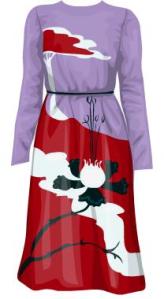
Did you see the dress that Kim was wearing the other day? It was purple  and red with a strange picture of a flower on it. It was just atrocious!

The service at that restaurant was atrocious the last time I went there! I’ll never go back again!

My brother is an atrocious driver! I’m scared every time he gets behind the wheel of a car!

Generally, we don’t use this word to describe people except when describing their role at doing something (cook, driver, etc). It’s more common to use “atrocious” to describe things or situations.

The pronunciation of this word is /at TRO shus/.

grammatical word: take (part 1)

https://i0.wp.com/fc01.deviantart.com/fs10/i/2006/139/0/f/Take_My_Hand_by_pinkbaby.jpg

I’ve already written about the common verbs “get” and “make” in my blog and today, I’d like to write about another one: “take”. Just as with the other verbs, there are several ways in which we can use “take”.

1. to put something into one’s possession. For example:

Please take one of these samples. They’re free!

I took this flyer from the stand in front of your store. I hope that’s ok.

2. to grip another person’s hand. For example:

Take my hand so that we don’t get separated in the crowd.

In the last scene of the movie, the boy took his father’s hand and they went back into their house.

3. to put air into one’s body. For example:

Take a deep breath before you dive into the water.

If you start to panic, just take deep breaths and that will calm you down.

4. to surprise someone. For example:

The ending of the movie really took me by surprise.

I was really taken by surprise when I found out that Nick had quit his job. (passive voice)

5. to write down notes when listening to something. For example:

Do we have to take notes during the lecture?

I took notes during the lesson. I can make you a copy of them if you like.

6. to sit down. For example:

Please take a seat and we’ll get started.

As soon as I took my seat, the play started.

7. to bring someone to a place. For example:

I’m going to take my friend to the museum to see the new exhibition.

My children want me to take them to Disneyland this weekend.

8. to react to a piece of news. For example:

How did Doug take it when you told him he was fired?

Sarah didn’t take it well when I told her I wanted to break up with her.

9. to measure someone’s temperature. For example:

My mother took my temperature this morning and said that I have a fever.

The nurse will take your temperature before the doctor sees you.

10. to require time in order to accomplish something. For example:

It takes time to get over a broken heart. You’ll feel better in a few months.

The project took more time than we had anticipated.

So these are the first ten ways in which we can use this verb. I’ll continue with “take” in next week’s blog for grammatical words.

the difference between words: dove and pigeon

https://i0.wp.com/www.faqs.org/photo-dict/photofiles/list/346/698dove.jpg

https://i0.wp.com/www.birding.in/images/Birds/rock_pigeon.jpg

I don’t know about other languages, but in Korean and Japanese there is only one word for both a dove and a pigeon. Therefore, Korean and Japanese people often get confused about them. I would like to explain the difference in my blog today.

A dove is the beautiful white bird that is the symbol of peace. A pigeon, on the other hand, is the bluish grey bird which is usually found in parks and eats anything it can find. Most people like doves, but hate pigeons. Let me give you some example sentences using these two words:

I want to put a dove on my logo because it’s the symbol of peace, and I think people will like that.

I saw a dove flying outside my window this morning. It was so beautiful!

There are so many pigeons outside my office building. I hate having to walk through them.

I saw a bunch of pigeons eating some garbage the other day. They’re so disgusting!

From what I understand, these two birds are from the same family and very closely related. I think the only major difference between them is their coloring.

I’m sorry if I’ve offended any pigeon lovers out there, but I think the majority of people don’t like them.

Next entries » · « Previous entries