the difference between words: in and later

vf

Many of my students make mistakes when talking about the future, so I’d like to clear up the difference between the use of  “in” and the use of  “later”.

We use the word “in” when talking about a future event which will happen at a certain time from NOW. For example:

I’m going to go to my hometown in five days.

The new Brad Pitt movie will open in one week.

My package is supposed to be delivered in a few days.

We use the word “later” when talking about an event which happens at a future time from a moment which is NOT now. For example:

I arrived in Tokyo on March 12th, and then I went to Osaka three days later.

I will get home at 6:00, and then my friend will come over about two hours later.

On my way to work, my train suddenly stopped, but it started again about five minutes later.

As you can see with the word “later”, it can be used with both the past and the future tense. We usually state the time or date in these sentences (as in the first two examples), but it’s not always necessary (as in the third example).

inseparable phrasal verb: run into

vb

The phrasal verb for today is “run into”, and it has two meanings:

1. to meet someone by accident. For example:

I ran into one of my old friends from high school at the shopping mall today.

I don’t want to go to Jerry’s Pub because my ex-girlfriend often goes there, and I don’t want to run into her.

Have you ever run into your boss outside of the office?

2. to encounter a problem. For example:

We’ve run into a problem with one of our investors. He’s decided not to give us any money after all.

I ran into a technical problem while I was trying to set up the Internet connection on my computer.

Our presentation has to go well tomorrow. I hope we don’t run into any problems.

In both cases, the expression means to encounter someone or something by accident. In the first meaning, it could be a positive or a negative situation but, in the second meaning, it’s always negative.

grammatical expression: to do with

220px-Whats_love_got_to_do_with_it_poster

I have another very common expression that we use in English today: “to do with”. This expression is used to talk about something that is connected to someone or something else. For example:

Why did you suddenly start talking about cars? That has nothing to do with what we’re discussing.

I’m not in the marketing department, but my job has a lot to do with marketing.

I don’t have anything to do with the ABC project, so maybe you should talk to someone else.

A: I’d like to talk to you about Bill’s idea about improving the office.

B: Why? What has his idea got to do with me?

In English, we can say “have to do with” or “have got to do with” (as in the last example). Both “have” and “have got” mean the same thing, but “have got” is more commonly used in conversation while “have” is used in both conversation and writing.

If you have trouble remembering this expression, just think about the old Tina Turner song, “What’s Love Got To Do With It?”.  🙂

idiom: to be tied up

lucy-tied-up1

I have another idiom today which is often used in business situations: “to be tied up”. This expression is used when people want to say that they are busy doing other things so that they can’t do something else. For example:

I’m afraid I can’t meet with you on Monday at 3:00. I’ll be tied up all Monday afternoon.

I’m going to be tied up with meetings all day on Thursday. Let’s try to meet on Friday instead.

I’m sorry, but Mr. Tanaka is tied up in a meeting right now. Would you like to leave a message for him?

So, as I mentioned already, this expression is used in business situations. If you want to talk about a free time situation, you can say, “I’m busy.” or “I have plans”.

adjective: crooked

crooked-smile-crooked-teeth

Today I have an adjective for you: “crooked”. It has two meanings:

1. for something to not be straight. For example:

The picture on the wall was crooked, so I straightened it.

I hope my tie isn’t crooked. I want to make a good impression in my job interview.

I used to have crooked teeth, so I got braces when I was younger.

2. for an important person (a high level businessman, a politician, a police officer, etc) to use their position to make money illegally. For example:

It was recently discovered that the vice president of my company is crooked. He’s been stealing money from the company and putting it into a Swiss bank account.

Recently, there’s been a government scandal in which several crooked politicians were caught taking bribes.

There are many crooked cops in the world who will let criminals go if they pay them.

In the examples, there are a couple of words people might not know. The word “bribe” means money that someone pays to an important person in order to influence them, and the word “cop” is a slang word for police officer. We usually say “crooked cop” in English, but it sounds unnatural to say “crooked police officer”.

grammatical word: eventually

Lourens_Eventually02

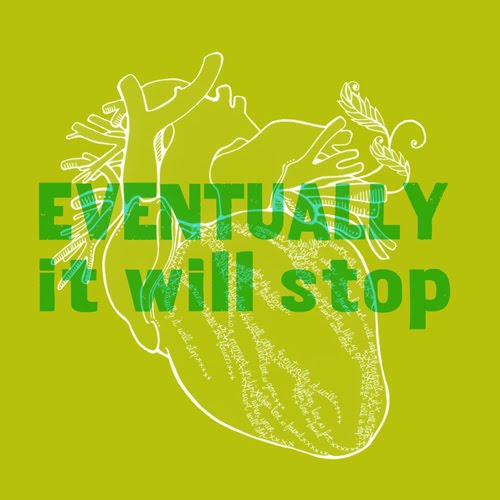
Today I’d like to talk about an adverb which is commonly used in English: “eventually”. It is used to talk about situations when something will happen at a later time, but we don’t know exactly when it will happen or we choose not to say exactly when it will happen. For example:

Right now I’m working for ABC Company, but eventually I’m going to look for another job.

Right now the economy is bad, but it will improve eventually.

My sister is learning French these days. She’s just a beginner now, but I’m sure she’ll eventually be a very good French speaker.

We can also use this word in past tense sentences to talk about when something happened at a later time than something else. Again, either we don’t know how long it took, or we don’t want to say. For example:

My sister was married for a while, but eventually she got a divorce.

Getting up early was very difficult for me at first, but eventually I got used to it.

My grades in high school were very bad in my first year, but eventually they got better.

the difference between words: use to and be used to

life_is_not_fair_get_used_to_it_bill_gates_mug

Last week, one of my students asked me to explain the difference between “use to” and “be used to”; so that is what I’d like to write about today.

In English, when we say we used to do something, it means that we did something on a regular basis in the past, but that we no longer do it. For example:

When I was a kid, I used to watch cartoons every Saturday morning.

I used to smoke, but I quit about two years ago.

I used to have to get up at 5:00 am but, with my new job, I don’t have to get up until 8:00 a.m.

We can also use the negative form to talk about things we didn’t do in the past but that now we do. For example:

I didn’t use to drink much, but lately I’ve been drinking a lot.

I didn’t use to have to go on business trips, but now I do.

However, when we say we are used to doing something, it means that we have become accustomed to something that we didn’t like or that was difficult for us in the beginning. For example:

When I lived in Korea, eating the spicy food was difficult for me, but I got used to it.

I really hate the crowded trains in Tokyo. I don’t think I’ll ever get used to riding them during rush hour.

A: Getting up early for my new job is really hard for me.

B: Don’t worry. You’ll get used to it eventually.

So, as you can see, “use to” is followed by the base form of a verb, and “be used to” is followed by the -ing form of a verb or by the pronoun “it”. It’s very important in English not to get these two expressions mixed up. I hope that answers my student’s question.

inseparable phrasal verb: put up with

what-some-dogs-put-up-with--1311771602-1310

Today’s phrasal verb is “put up with”, and it means to tolerate someone or something that is negative. For example:

My new boss is really demanding, but I need my job. I guess I’ll just have to put up with him.

I’m so tired of your insults, and I’m not going to put up with them anymore!

My friend just left her husband. He’s an alcoholic, and she put up with it for years because she loved him, but she just couldn’t do it any longer.

I know you don’t like getting up early, but you’re just going to have to put up with it if you want this job.

I’m planning to move out of my apartment because my neighbors are really noisy. I just can’t put up with them anymore.

As you can see, it is often used with: “can’t”, “couldn’t”, “have to” and “not going to”.  This is a very common expression, so I hope that you will find it useful in your daily conversations.

idiom: to take a load off (one’s feet)

IMG_4098

It’s the beginning of Golden Week in Japan. This is a famous holiday season in Japan which allows the very hard-working people of this country to take a well-deserved break for about five days. So, in the spirit of holiday, I’d like to write about an idiom which has to do with relaxation: “to take a load off”. We can also say “to take a load off one’s feet”. This idiom means for someone to sit down and relax. Let me give you some examples:

You’ve been working so hard all day. Please sit down and take a load off your feet. I’ll get you a drink.

I’m so tired right now. I need to find a place where I can sit down and take a load off.

Please come in and take a load off your feet. I’ll be with you just as soon as I’ve finished cooking dinner.

So, with this expression, the “load” is a person’s own body weight. When we sit down, we no longer have to support the weight of our own bodies; therefore we take that load (weight) off our feet. This expression is only used in casual situations.

adjective: articulate

vd

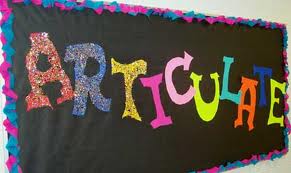
The adjective “articulate” is used to describe a person who can express themselves very well, usually in their native language. These people usually have a large vocabulary and can use it very well when they are speaking. Examples of people who SHOULD be articulate (but who often are not) are politicians, lawyers and university professors. Here are some examples of how to use this adjective:

Many people consider President Obama to be the most articulate president of the United States in recent years.

Lawyers on TV dramas are always very articulate during the courtrooms scenes. I wonder if real lawyers are just as articulate.

My English literature professor at university was such an articulate speaker! He could always explain the details of the novels we were studying in such an impressive way!

As I mentioned, the word “articulate” is usually used for people who are speaking their native language. When we are talking about people who can express themselves well in a foreign language, we usually use the adjective “fluent”.

Also, you should be aware about the pronunciation of this word. Because the word ends in -ate and is an adjective, the pronunciation is /ar TIK kyu lit/.  It is NOT /ar TIK kyu late/. Please remember that all adjectives ending in -ate have the pronunciation of /it/.

Newer entries » · « Older entries